The Great Unlearning: Why Innovation Starts With Letting Go

Being named PRovoke Media’s Agency Innovator of the Year forced me to be honest about what innovation looks like in practice, not just how our industry talks about it.

Because in most agencies, what passes for innovation is really iteration: a new tool applied to an old way of thinking, or a familiar framework with a fresh coat of paint.

The pressure is coming from every direction. Everyone wants proof, relevance and results they can feel.

The problem isn’t effort. PR teams are working harder than ever, with more pitches, creators, channels and content. But volume is not impact. Brands still optimizing a playbook that stopped working five years ago aren’t falling behind slowly; they’re accelerating toward irrelevance.

 Here are four ways I am unlearning to move forward:

  1. Unlearn the Brand as Protagonist

The brands earning real attention today create the conditions for a story worth telling. That means stepping back and letting a community, a creator or a cultural moment lead. It means creating stories journalists want to cover, not just ones the brand wants placed.

When Duolingo announced the “death” of its owl mascot Duo in February 2025, it lit the match and got out of the way. Other brands posted mock condolences. Celebrities joined in. National news covered it. The brand didn’t control how the narrative took form; they just created the opening and let the internet take it from there. The result? 1.7 billion impressions.

  1. Unlearn the Habit of Crisis-Only Reputation Thinking

Most brands treat reputation management like insurance, something to scramble for when things go sideways. That model is broken, and it usually becomes the communications team’s problem at the worst possible moment.

Trust isn’t built in a crisis response. It’s revealed by one. What looks like a communications problem in year three is often a credibility deficit from years one and two.

When public anxiety about AI was at its peak, O2 didn’t wait to be put on the defensive. It built “Daisy the AI Granny,” an AI character designed to protect elderly people from phone scammers and deployed it publicly. The campaign wasn’t just clever. It was a values statement made before the question was asked. When the AI ethics conversation intensified, O2 already had an answer that didn’t need to be defensive.

  1. Unlearn the Big-Platform Monoculture

If your entire earned media approach is built around chasing major placements, that’s not strategic, that’s a (bad) habit. And you’re overpaying for reach that may not convert or drive business impact.

Skincare brand Jaxon Lane didn’t launch with a national media campaign. It seeded its hero product, a men’s sheet mask, among micro-influencers with just a few thousand followers who specialized in sheet mask reviews. Magazine editors followed those creators to spot trends and reached out directly. Within a year, the Wall Street Journal was interviewing Jaxon Lane about men’s grooming habits. The niche voice didn’t just reach the right consumer; it reached the right journalist.

One deeply trusted niche voice did what no broad-reach campaign could have manufactured. Precision beats presence, and it’s a much easier story to tell when someone asks you to justify the budget.

  1. Unlearn PR as a Downstream Function

The most expensive habit in modern marketing is bringing communications in after the product is built, the campaign is locked, and the decisions are made. The ask is amplification. That’s useful. It’s only a fraction of the value on the table.

PR isn’t just a megaphone. At its best, it builds the credibility and cultural relevance that make people care what a brand does next, not defensively, but proactively. The goal isn’t to avoid bad press. It’s to build a reputation strong enough that when you have something to say, people are already leaning in.

That case has never been more urgent. In the era of generative AI search, earned credibility is infrastructure. The brands appearing in AI-generated answers aren’t there because they paid for placement; they’re there because they built a body of credible, earned coverage that AI engines recognize as authoritative. Treat PR as an afterthought, and you won’t just lose share of voice. You’ll disappear from the conversation entirely.

Brought in early, great PR sharpens positioning, finds the angles most likely to resonate and pushes ideas from adequate to compelling. Brought in late, it can only dress up what’s already been built. The brands that get this right build with PR from the start.

The only advantage that compounds

Reach can be bought. A byline can be placed. But the credibility that makes either of those things land with audiences who actually influence purchase decisions, shape perceptions, and determine cultural staying power comes from a reputation that must be earned.

Innovation isn’t always an addition. Sometimes it’s a subtraction: a habit retired, an assumption challenged, a model you stop defending because the market stopped rewarding it.

That’s the unlearning. For any brand serious about what comes next, it isn’t optional.

Citizen Experiential Triumphs at the 2026 Canadian Event Awards

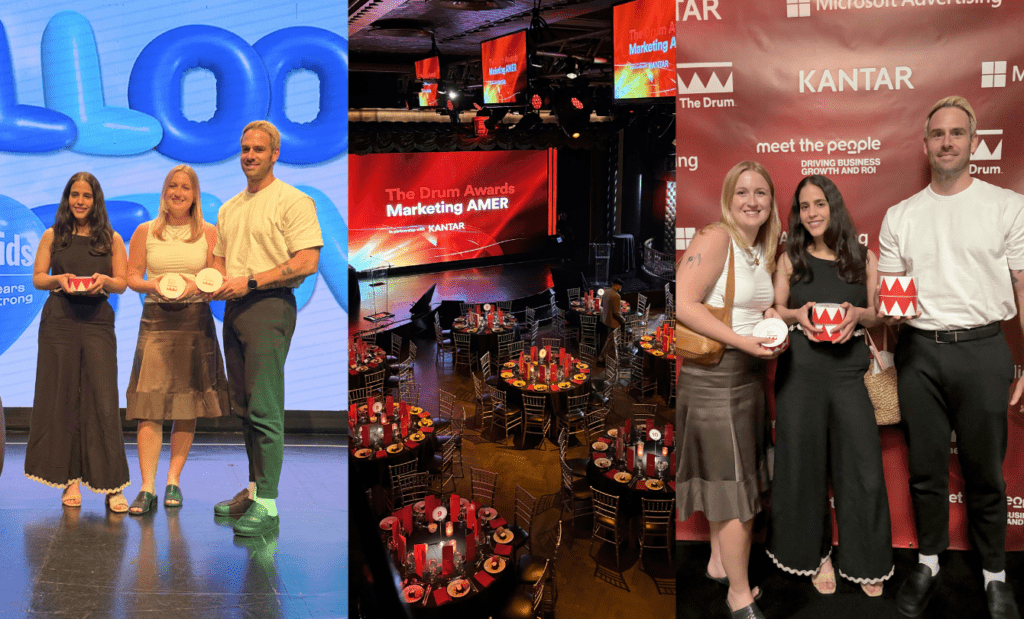
Earlier this week, the Canadian events industry gathered at the Canadian Event Awards to celebrate the visionaries and creators shaping the country’s experiential marketing landscape. It was a milestone night for Citizen Relations as they took home two prestigious wins: Best Pop-Up and the Founders ICON Award – the industry’s highest individual honour. 

In a definitive ‘Hall of Fame’ moment for the industry, Kevin Wagman, Managing Director, Experiential at Citizen, received the ICON Award. This prestigious accolade is the Canadian events industry’s equivalent of a lifetime achievement award, marking the pinnacle of professional recognition.

Unlike category-specific awards, the ICON Award is peer-nominated and merit-based. Reserved for individuals with over 20 years of leadership, the award celebrates those who have shaped the profession through mentorship, innovation, and industry advancement. 

Over a career spanning 20+ years, Kevin has cemented himself as an industry leader by designing and implementing marketing campaigns & experiential events for tier-one clients throughout North America and Europe. Last year, Kevin was included on Canadian Special Events’ list of 2024’s Top 25 Most Fascinating People

“Having Kevin recognized with the ICON Award is an incredible moment for all of us at Citizen,” said Stephanie Hurst, Citizen’s newly appointed President, Canada. “While this honour celebrates his incredible personal legacy, the true magic lies in how he has mentored and shaped our Experiential team into the powerhouse it is today.”

An annual winner at the Canadian Event Awards, the celebration continued as the Citizen took the stage again, winning Best Pop-Up Experience for their work on the Santa’s Workshop, brought to you by Shoppers Drug Mart.

To establish Shoppers Drug Mart as the ultimate holiday gifting destination, Citizen transformed The Well in Toronto into the North Pole. This wasn’t a traditional retail space; it was a fully immersive Santa’s Workshop that featured a stunning Beauty Gift Gallery, a Self-Care Chalet, and a complimentary photo experience with Santa Claus himself.

This recognition comes at a time of increased momentum for Citizen. Earlier in the year, the agency was shortlisted at both Campaign’s Global and Canadian Agency of Year Awards and last year, they took the podium for a consecutive third time at Strategy’s AOY Awards

Citizen Shortlists at Campaign’s Global PR AOY

Global integrated PR agency, Citizen Relations, has been recognized on the world stage, being named a finalist for Campaign’s Global PR Agency of the Year 2026. With entries from top agencies across 16 different countries, Citizen is honoured to be one of the agencies selected worldwide. 

The Campaign Global Agency of the Year Awards are unique in the industry; rather than focusing solely on creative campaign hits, the judging process involves a deep-dive audit of the agency’s “engine,” evaluating its workplace culture, innovation, and overall business health.

“Being shortlisted globally is a testament to the trust our clients place in us to navigate a messy, fast-moving world,” said Nick Cowling, CEO at Citizen. “In this landscape, reputation is a brand’s most critical asset. This recognition proves that our strategy of turning cultural complexity into commercial confidence, is delivering the real-world impact our industry needs right now.”

Citizen had a strong 2025, marked with large industry wins, including a feature on PRNews’ 2026 Agency Elite Top 120 list and a  PR Agency of the Year (Bronze) win at Strategy’s AOY Awards in Canada- their third year in a row on the podium. Citizen’s work over the past year has delivered high-impact results that moved both culture and bottom lines for clients; the team’s Balloonspotting campaign for SickKids Foundation drove record-breaking donations while their industry-disrupting campaign for Kidde delivered 4B+ impressions and demanded the topic of fire safety be brought to the forefront. The momentum has continued into 2026. Earlier this month, Citizen was named a finalist for Campaign Canada’s PR Agency of the Year and featured on PRovoke Media’s Top 100 Best Agencies in the USA list

The winners for Campaign’s Global Agency of the Year will be announced at the awards ceremony in mid-June in London.

Report: Sentiment Drives QSR Consumer Behavior (2026)

At the start of 2026, inflation dominated headlines; the US Bureau of Labor Statistics reported a jobs slowdown,1 and Canada’s Labour Force showed a decline.2

McDonald’s made news in March by launching a new $3-and-under value menu and a $4 meal deal.3 These trends coincide with consumer sentiment seeking affordable comforts and small treats, such as coffee drinks, manicures, or collectibles. 

While we had a sense that sentiment drives QSR consumer behavior, we wanted to dig into the facts.

Gen Z and Emotional Fast-Food Consumption

While two-thirds of Gen Z report burnout,4 industry reports show the same proportion ordering takeout or delivery at least once a week.5 The overlap is apparent. 

By the start of 2025, we noticed engagement with content about the emotional benefits of fast food was owned by 18-34 year olds by a factor of 15-to-1, compared to other generations. There’s a strong relationship between sentiment and QSR consumer behavior, and marketing teams must adapt their strategies to take advantage of this connection.

Occasional Luxuries

Conversations discussing fast food go beyond flavor, value, and brand on social media. Between 2022 and 2025, comfort-based conversations about fast food grew online by a massive 155%.

Quick-service restaurants have a relationship to comfort, nostalgia, and emotion unlike anything seen before. We wrote about the evolution of fast food from sustenance to self-care in 2025, and the trend continues to grow.

How Consumers Talk About Brands

We looked specifically at what drove consumer purchases last year. There was no clear majority, as brands always know. A mixture of hunger, convenience, price, location, and timing all come into play when running a restaurant.

In their own words, one-in-five consumers bought from a quick-service restaurant to reward themselves for a job well done. Whether they got a promotion, worked hard on a school project, or cleaned their home, nearly 20% of consumers bought fast food because they reached a goal or milestone.

Close behind, just under 16% chose fast food to pursue happiness. They chose the option “treating yourself to feel better or happier”. 

These points highlight the fulfillment quick-service restaurants play, beyond their caloric content. 

qsr sentiment drivers chart

Sentiment Transcends Brand

This conversation around sentiment, emotion, and self-care isn’t owned by any single QSR brand. While many consumers have personal favorites, a third of posts in 2025 mentioned no quick-service restaurant by name when talking about comfort-based consumption.

Whether due to habit or convenience, the lack of a clear leader in sentiment-based consumption leaves room for growth. The 27% of brand-agnostic conversations represent an open opportunity.

What Can Brands Do When Sentiment Drives QSR Consumer Behavior?

Based on the data, the essential question for QSR brands is how to adapt strategies to connect emotionally with consumers.

As of Jan 2026, conversations that link QSR and mental health are up 58% from two years ago.6 Research shows that Millennials spend more on dining out, but Gen Z dines out more often.7 They want their dollars to go further, which means they’re turning to cheaper options.

Here are our four tips for how to win your brand’s share of consumer sentiment:

1. Consider Emotional Customer Journeys

Review your customer journey to seek where sentiment shows up. What are the drivers of their emotional QSR engagement? Are there ways that your brand can be the natural choice based on their behavior? What do searches on your site, search engines, and on social media show? Look for patterns in intention and direct your campaigns to capture that moment.

2. Look at Loyalty

Loyalty programs offer real-time intelligence on customer behavior. Buying patterns related to seasons, times of day, and broader cultural moments give a view as to why consumers choose a QSR brand. Make that part of your external messaging to show that you’re connected to their intent.

3. Create QSR Cultural Moments

Instead of waiting for the right time, QSR brands can create relevant moments based on QSR culture. Stand out from the crowd without paying influencer or celebrity endorsement fees by focusing on what’s special about the audience’s relationship to your brand or QSR in general. Consider Taco Bell’s “fourth meal” and Burger King’s “Whopper detour” as ways to influence behavior on your own terms.

4. Measure Sentiment Over Sales

When trying to influence sentiments, keep your eye on the conversation over the ledger. Owning more share of emotional content in the market may not result in immediate sales results. Social listening and sentiment analysis are the tools for understanding success here.

If you’re eager to build a meaningful with your audience, we’re here to help.

–––

1. Bureau of Labor Statistics

2. Government of Canada

3. Today.com

4. Fortune

5. Food Institute

6. via Meltwater

7. Investopedia

Meet Stephanie Hurst: The “Integrator” Leading Citizen Relations Canada into its Next Chapter

Global PR powerhouse Citizen Relations has officially welcomed Stephanie Hurst as its new President, Canada. Based in the Toronto office, Stephanie joins the executive leadership team to oversee the agency’s flourishing Canadian operations and drive a 360-degree integrated growth strategy.

A seasoned marketing and advertising veteran, Stephanie’s career has spanned both the client and agency sides, from leading the Dove brand at Unilever Canada to serving as CEO of creative agency john st. and marketing consultancy theturnlab. 

We sat down with Stephanie to chat about her marketing leadership philosophy, why reputation is the only currency that matters, and why she’s excited to be the “plus sign” in the Citizen equation.

Q&A with Stephanie Hurst

You’ve had a storied career across major brands like Unilever and top-tier creative agencies. What was it about Citizen Relations that made you want to call it your new home?

Stephanie: I’ve spent my career moving between the agency world and the client side, which has given me a 360-degree view of the marketing landscape. Earned is here to stay, and Citizen has been leading that charge for a while now.  In this era where consumers are increasingly skilled at ignoring paid ads, it’s fair to say media can buy attention, but it doesn’t buy trust. Citizen understands that reputation isn’t just a department; it’s a strategy that drives business. I was also deeply impressed by the agency’s “Agency of the Future” investments—specifically how we blend creativity with data to stay ahead of the curve.

You’ve been part of some iconic cultural moments, including bringing Dove’s ‘Campaign for Real Beauty’ to Canada. How does that foundational brand-building experience shape your approach today?

Stephanie: My years in advertising agencies gave me a foundation in brand building and craft, while Unilever taught me the “business of brands”—specifically the rigor of P&L management. My “sweet spot” is helping brands navigate change by combining empathy and business understanding. It’s about connecting the dots across a business to unlock growth

You describe yourself as an “integrator.” Can you tell us more about that leadership philosophy?

Stephanie: Every leader says they want to mobilize talented people, but I see my role specifically as being the “plus sign” in the equation 1 + 1 = 3. I’m not always the person coming up with the brand-new idea in a brainstorm; instead, my strength lies in making other people’s ideas better and spotting the disconnects. I want to ensure every team’s brilliance is fully realized by working in the same direction.

What do you see as the biggest gap in the marketing and communications industry right now?

Stephanie: Siloed thinking. Frequently, reputation and corporate comms sit in a different spot than brand building. To me, brand perception is based entirely on the experience a consumer has with it—it cannot be disconnected. Citizen is uniquely positioned to bridge this gap because we operate at both the corporate and consumer levels, remaining data-focused and business-minded. In fact, Citizen is doubling down on reputation as a tangible business asset because we recognize that PR’s true power lies not in managing the media, but in managing integrity.

For brands looking at their current strategy, what are the indicators that they are “ready” for a partnership with Citizen?

Stephanie: It’s usually when they realize that “just buying attention” isn’t working as hard as it used to. If a brand is frustrated that its marketing spend isn’t translating into long-term trust or authority, they’re ready for the work we do. As we look toward the future of brand communications, reputation is emerging as a brand’s most undervalued performance asset; one that creates a “Trust Premium” that lowers customer acquisition costs and accelerates every other marketing investment. Consumers now discover brands through search engine authority and the reputation shared by friends and social media—we help brands build that ecosystem of trust.

What does a “win” look like for you and your clients?

Stephanie: A win is moving beyond the role of a PR program purveyor to becoming a true partner in building and protecting reputation. My goal is for Citizen to be the first call—or better yet, the partner who identifies a business challenge or opportunity before the phone even rings. 

You’ve been in the office for about a month. What has surprised you most about the team so far?

Stephanie: Despite the incredible success Citizen has enjoyed in Canada—like being on the Agency of the Year podium for three consecutive years—there is zero complacency. Everyone is incredibly curious, open, and driven to evolve. There’s an openness to working together differently that’s very infectious.

Finally, for a little fun, what fuels your “plus sign” energy outside of the office?

Stephanie: As my three children are now young adults, I now have time to develop my own interests again. Pickleball, any and all outdoor time, travel with my husband and my core group of girlfriends are all major passions for me right now. I’m also an “army brat” who attended 11 different schools before university, which probably explains my love of adaptability and change!

The Commercial Duality: Why Gen Z Champions the “Sellout”

The era of the “hidden ad” has reached its expiration date. For over a decade, brands and influencers performed a delicate dance around sponsorships, fearing that overt commercialism would shatter the illusion of authenticity and destroy consumer trust. But there’s a sharp shift in the cultural narrative: most Gen Z don’t just tolerate the hustle — they respect it. This is the Commercial Duality of Gen Z and our Gen Z marketing strategies. They’re obsessed with relatable personalities and radical transparency, yet they’re also least likely to punish a creator for “selling out”. They don’t view the creator economy as a deceptive marketing ploy; they view it as a legitimate career path.

The Data: A New Standard for Voracious Consumption

Gen Z’s engagement with influencer content is unmatched, no matter which persona they fit into. While Millennials and Gen X often hit the “unfollow” button at the first sign of excessive sponsored content, Gen Z is far more forgiving, provided two non-negotiable criteria are met:

  1. The Vibe is Viral: They over-index on following creators for their spectacle and “cultural heat,” understanding that fame naturally attracts brand partnerships.
  2. The Personality is Real: They demand a relatable persona and transparency in communication.

For this generation, transparency doesn’t mean “I don’t do ads,” it means “I am honest about the ads I do.” They are “Commercial Realists” who understand that if the content is free, the brand pays the bill.

Gen Z Marketing Strategy: Alix Earle x The Super Bowl

Successful brands have stopped hiding the brief. Instead, they turn the commercial relationship into “lore.”

During the 2025 Super Bowl, Alix Earle’s partnerships with Poppi and Carl’s Jr. exemplified this mastery. Rather than slipping a corporate deal quietly into her feed, she framed the moment as a “we made it” milestone for her community. The ad wasn’t an interruption; it was a plot point in her ongoing narrative.

The result? Her audience didn’t roll their eyes; they celebrated her success. By taking them behind the scenes of the “hustle,” she satisfied their craving for both virality and relatable transparency.

Engaging the 5 Personas: Persona-Specific Takeaways

To turn the “Commercial Duality” into a brand advantage, marketing efforts must align with the unique motivations of the five Gen Z personas identified by The Gen Z Collective.

  • The Status Architect: Frame sponsorships as a “premium” achievement. They value success and image-consciousness, so show them that partnering with your brand is a sign of making it to the top.
  • The Beta Tester: Lean into the “perpetual upgrade” mindset. Use creators to offer early access or “hands-on” trials of new features, letting them feel like they are part of the brand’s evolution.
  • The Value Vigilante: Lead with radical transparency. Since they hold brands to rigorous standards, ensure your influencer partnerships provide evidence of quality and align with their practical, value-driven world.
  • The Anxious Avoider: Create a “digital sanctuary”. Your commercial content should feel like a “safe space”—think slow-paced, home-based content that emphasizes comfort rather than the high-energy hustle.
  • The Risk Junkie: Focus on niche access and novelty. Use limited-edition digital drops or “if you know, you know” community spaces to spark their curiosity for the “weird” and the unhinged.

The CEO Takeaway: Brand as a Co-Creator

Modern brand leadership requires a shift from “influencing in the shadows” to “co-creating in the spotlight”. If a creator is relatable and the product is relevant, the audience won’t just tolerate the ad—they will champion your brand’s success for landing it.

Action Item for Brands: Review your influencer briefs. Are you asking creators to hide the commercial intent? Stop. Give them the creative freedom to celebrate the sponsorship as part of their narrative. Gen Z is rooting for the hustle—ensure your brand is part of the win with Gen Z marketing strategies curated just for them. 


Winning Gen Z Loyalty: Beyond Rewards Programs and One-Off Campaigns

While not true for all of them, most Gen Z are known to be obsessed with their personal narrative. They view identity as a fluid, living document – constantly iterating, experimenting, and refining who they are in real-time across platforms like TikTok and Instagram. Yet, this generation presents a fascinating contradiction: while their identities are fluid, they demand absolute, fixed consistency and effortless utility from the brands they allow into their lives.

This social/identity paradox highlights the tension between Fluid Identity vs. Fixed Utility.

Our Gen Z Collective found that the Beta Testers persona exemplifies this shift. They don’t view brands as static entities; they see them as ecosystems in perpetual upgrade. For this group, loyalty isn’t a passive points program, it’s a daily commitment to relevance. The moment a brand becomes clunky, irrelevant, or fails to deliver on a promise of convenience, the Beta Tester evolves past you.

Sephora’s Phygital Mastery

Sephora remains the gold standard for navigating this paradox by recognizing that the Gen Z customer journey is a non-linear, always-on, omnichannel loop. They win over the Beta Testers through three strategic pillars:

  • Integrating Digital Identity: Their Virtual Artist app allows customers to “try on” identities instantly — a form of digital beta testing. This fluidity is anchored by flawless, fixed utility: the app works perfectly, and the data-driven recommendations are highly accurate.
  • Unifying the Experience: Sephora ensures zero friction. Loyalty points, purchase history, and personalized carts are identical whether the customer is on a smartphone or standing in a physical aisle.
  • Delivering Constant Utility: They use digital interfaces to solve physical friction, such as streamlined in-store pickups and returns. For the Beta Tester, this isn’t a “premium” feature; it is the baseline expectation for their loyalty.

Strategic Takeaways: Engaging the 5 Personas

To capture this digital-first loyalty, brands must deploy the “perpetual operating system” mindset across the five distinct Gen Z personas

  1. The Status Architect: Focus on the aesthetic of optimization. Provide high-design digital tools that help them curate their public-facing “Main Character” journey and wellness era.
  2. The Beta Tester: Prioritize optimization and customization. Offer early access to AI-driven features or “hands-on” trials of new tech that eliminates daily friction.
  3. The Value Vigilante: Lead with Radical Transparency. Use digital platforms to provide evidence of sourcing and quality, as they seek reliability and hold brands to rigorous standards.
  4. The Anxious Avoider: Build a digital sanctuary. Simplify your user interface to reduce “decision fatigue” and frame your digital utility as a way to enhance their comfort and “safe space” at home.
  5. The Risk Junkie: Lean into discovery and niche access. Use limited-edition digital drops or “if you know, you know” community spaces (like subreddits) to spark their curiosity for the “weird” and novelty.

The CEO Takeaway: Brand as a Perpetual Operating System

The goal for modern leadership is to stop thinking in terms of “campaigns” and start developing a “perpetual operating system”. Loyalty today is earned by making a consumer’s life effortless. Your marketing efforts must invest as aggressively in the digital utility of your product as in the product itself.

Action Item for Brands: Evaluate your digital ecosystem: apps, websites, and service chats. Are they as high-quality as your physical product? Are you willing to A/B test your services in real-time to match the speed of your audience? If the answer is no, you are leaving your most valuable customer segment on the table.

The Rise of Affordable Affluence: Why Gen Z Is Spending More on Groceries Over Gucci

For decades, the “Gucci” standard defined aspirational success: bold logos, luxury handbags, and overt displays of wealth calibrated to signal status at first glance.

That standard no longer works. Gen Z has fundamentally rewritten the rules with what we call the “Groceries” standard: where Gen Z are actively choosing to splurge on premium groceries and wellness products over branded items. 

Despite navigating unprecedented financial pressures, this generation hasn’t stopped spending — they’ve just redirected it. They’ve embraced “Affordable Affluence,” a new paradigm where status isn’t just derived from designer labels, but from premium essentials and high-performing micro-luxuries.

Stanley, Owala, HydroJug: Why Hydration is the Newest Status Symbol 

The infamous rise of Stanley reveals this shift with precision. Functionally, it’s a tool for staying hydrated. Culturally, it achieved phenomenon status by evolving from camping gear to essential lifestyle accessory because it delivers on three non-negotiable Gen Z criteria:

Flawless Utility: It solves genuine daily friction points (cup holder compatibility, 48-hour ice retention)

Hyper-Personalization: Limited-edition colorways transform a water bottle into a vehicle for self-expression and identity signaling

The Justifiable Splurge: It commands a premium price for its category, yet remains accessible as a status marker. The investment feels anchored in wellness, not vanity.

This pattern extends well beyond Stanley, which paved the way for Owala and HydroJug. Research reveals Gen Z over-indexes in their consideration of brands like Liquid Death and Cirkul, showing a consistent willingness to pay more when products deliver tangible improvements to their daily routines.

Beyond the Screen: The Value of In-Person Connection

While the “Groceries” standard defines what Gen Z buys, how they buy reveals another critical insight. Despite being labeled the “digital-native” generation, their behaviour varies and proves otherwise. They queue for hours at pop-up shops, archive sales, and flagship launches and not just for product access, but for the community energy that digital interaction cannot replicate.

Winning with the 5 Personas: Strategies for Functional Status

Capturing “Affordable Affluence” requires moving beyond generational marketing to engage specific mindsets. Here’s how to deploy the “elevated essential” and “in-person experience” across the 5 personas identified in our Gen Z Collective:

1. The Status Architect: The Wellness Curator

For this persona, aesthetic excellence and bodily optimization are inseparable. They demonstrate a 43% higher interest in emerging wellness trends and understand status as a reflection of their self-optimization journey.

The Strategy: For any category, position your product as a justifiable luxury that signals self-improvement. Use high-aesthetic, in-person activations that provide the “perfect shot” while emphasizing how the product aids their “main character” journey.

2. The Beta Tester: The Optimization Specialist

Motivated by efficiency and digital fluency, Beta Testers prioritize products that eliminate friction. They show 21% higher likelihood to make convenience-driven purchase decisions.

The Strategy: Your brand’s “affluence” is measured by frictionless utility. Highlight technical superiority and use physical events to offer “hands-on” trials. If your product saves them time or mental energy, it becomes a high-status essential.

3. The Value Vigilante: The Ethical Accountant

Pragmatic and discriminating, this persona seeks value validation, not discounts. They hold brands accountable to rigorous standards of integrity.

The Strategy: Win them over with radical transparency. Use your brand platforms to pull back the curtain on sourcing and quality. For them, a product that lasts a lifetime or supports a cause is a much louder status symbol than a flash-in-the-pan trend.

4. The Anxious Avoider: The Sanctuary Builder

Often depleted by relentless productivity culture, this group gravitates toward comfort and predictability. They demonstrate a 35% higher preference for staying home, unless an environment promises safety and minimal pressure.

The Strategy: Focus on the premiumization of the home. Whether you sell snacks, software, or apparel, frame your offering as a way to enhance their “safe space.” Status is found in the ultimate, high-quality version of a cozy, reliable essential.

5. The Risk Junkie: The Niche Discoverer

Risk Junkies pursue the emerging and undiscovered. They show 156% higher likelihood to select products based on distinctiveness and innovation.

The Strategy: Lean into scarcity and discovery. Use limited-edition drops and “if you know, you know” physical pop-ups. For this persona, the “affluence” comes from the social capital of owning something rare and the adrenaline of the hunt.

The CEO Takeaway: Precision Over Prestige

The future of brand loyalty isn’t determined by price point, it’s defined by indispensability and intentionality. To win, brands must move beyond “unintentional consumption” and prove they deserve a place in Gen Z’s highly curated lives. This requires:

  • Prioritizing Precision: Clearly communicate the “why” behind your price and your product.
  • Facilitating Community: Leverage that Gen Z is looking for in-person connection to turn your brand into a destination.
  • Validating the Choice: Position your product as the smart, empowered decision that supports a balanced, optimized lifestyle.

The Bottom Line: In the era of the “Groceries” standard, the most successful brands won’t be the ones that are the loudest, but the ones that are the most indispensable to a Gen Z’s daily ritual.

The Great Resolution Divide: Why Gen Z is Splitting Between “ROI” and “Rest” in 2026

It is the first week of January. Historically, this is the moment when the “New Year, New Me” anxiety machine hits maximum velocity. But if you look past the crowded gyms and the detox ads, you will see that for Gen Z New Year resolutions, the traditional playbook has cracked down the middle.

As we kick off Q1, we aren’t seeing a singular generation striving for a singular definition of “better.” Instead, we are witnessing a “Pragmatic Pivot”. Gen Z is currently torn between two radically different approaches to the year ahead. One camp is treating their life like a high-growth startup, seeking a tangible “ROI” on their time and money. The other is actively rejecting the pressure to optimize, embracing “Resolution Fatigue” and the radical concept of being “Good Enough”.

To understand how to market to this generation right now, brands must look beyond the monolith. Using The Gen Z Collective personas, we can see exactly who is hustling, who is healing, and specifically what your brand needs to do to catch them before the January window closes.

How Gen Z New Year Resolutions Are Split 

Trend 1: The “ROI” Resolution

For a significant cohort, wellness is no longer defined by six-pack abs, but by a safety net. In a volatile economy, these Gen Z New Year resolutions are prioritizing: career advancement, new skills, and savings.

Beta Testers (The Optimizers)

  • The Vibe: “Confident leaders” who are “excited about AI”.
  • What they are doing right now: They are using the first week of January to overhaul their personal tech stacks. They don’t want a generic planner; they want tools that gamify their professional growth. For Beta Testers, self-education is a survival strategy, and they are the most likely to adopt AI tools to maximize their efficiency in Q1.
  • 👉 The Mandate: Stop selling generic health. Start selling “productivity” and “optimization.” Position your product as a tool that helps them get ahead in the “Hustle Economy”. Show them that buying your product provides a measurable return on investment for their career.

Risk Junkies (The Aggressive Investors)

  • The Vibe: “Zero Hesitation Mode” and “Adventurous”.
  • What they are doing right now: While others play it safe, Risk Junkies are bypassing traditional savings for crypto or high-risk assets (47% are confident with FinTech). They aren’t just saving; they are looking for the “hustle” that turns financial stability into a viral, social-first status symbol.
  • 👉 The Mandate: Gamify the experience. This group craves ownership and identity. Don’t sell “banking” or “safety”; sell a “Money Main Character” energy that feels risky and exclusive enough to share with their niche communities.

Status Architects (The Ambitious Esthetes)

  • The Vibe: “Career-focused” (71%) and “Image-conscious”.
  • What they are doing right now: For this group, “ROI” applies to their image. They are treating wellness as a premium asset – spending their Q1 budget on luxury groceries and skincare. They will pursue the ROI resolution, but only if it looks aesthetically pleasing enough to earn an invite to a daytime “Coffee Party”.
  • 👉 The Mandate: Pivot to “Investment.” Position your product as an essential asset for their personal brand. If you are selling wellness, it must be premium and shareable. You aren’t selling a gym membership; you are selling access to a lifestyle that signals they have “made it”.

Trend 2: The “Resolution Fatigue” Rebellion

Conversely, a massive split in the data shows many Gen Z-ers are entering the year “exhausted”. This group is rejecting the narrative that demands they fix everything “wrong” with them, opting for maintenance over transformation, and that reflects in the Gen Z New Year resolutions, or lack thereof. 

Anxious Avoiders (The Burned Out)

  • The Vibe: “Overwhelmed,” “Skeptical,” and “Homebodies”.
  • What they are doing right now: With 66% identifying as “anxiety-prone,” the pressure to optimize leads to paralysis. They are retreating to “sleepcations” or road trips to quiet inns. They are rejecting the “New You” in favor of “slow living”—baking homemade butter or hosting low-stakes dinner parties.
  • 👉 The Mandate: Stop selling transformation. Start selling “Comfort” and “Maintenance.” Validate their burnout by pivoting your messaging from “Fix Yourself” to “Treat Yourself”. Be the brand that gives them permission to opt out of the rat race and celebrate “Good Enough”.

Value Vigilantes (The Skeptics)

  • The Vibe: “Practical,” “Cautious Spenders” (77%), and “Reliable”.
  • What they are doing right now: They are viewing the sudden January marketing frenzy as a cash grab. Instead of buying into the hype, they are aligning with “Resolution Fatigue” out of a desire for authenticity. They are spending their time in offline communities or exploring “sober curious” movements rather than high-pressure self-improvement drops.
  • 👉 The Mandate: Drop the hype. Validate their skepticism by focusing on transparency, reliability, and community connection. Don’t push a limited-time “New Year” offer; push the long-term value and ethical standing of your brand.

The Tale of Two Strategies

Two brands have perfectly captured this bifurcation, proving that you can win Q1 by picking a lane.

Case Study 1: Cleo (Winning the “ROI” Crowd) No brand understands the “ROI Resolution” better than Cleo, the AI-powered financial assistant. Cleo doesn’t market “budgeting” as a boring chore; it gamifies the “hustle”. Their famous “Roast Mode” bullies users (lovingly) into saving money, using the harsh, meme-filled language of Gen Z internet culture. By hiring a “Chief Spending Officer” to demonstrate fiscal responsibility via TikTok, Cleo turned “saving money” from a dry resolution into a viral status symbol. They recognized that for Beta Testers and Risk Junkies, financial fitness is mental health.

Case Study 2: Mejuri (Winning the “Fatigue” Crowd) On the other side of the spectrum, jewelry brand Mejuri tapped perfectly into “Resolution Fatigue” with their “New Year, No Plans” campaign. Instead of pushing a “New You” narrative, they sent emails with subject lines like “New Year, Still You” and “New Year, Still Good”. They encouraged customers to reject the frenzy of self-improvement. By positioning their products as “permanent” rather than “limited edition drops,” they validated the Anxious Avoider’s feeling that maintenance is a victory and that they are “already good”.

The Takeaway

The “New Year” has just begun, but the window to resonate with Gen Z New Year resolutions is closing. Your consumers are either building an empire or building a fortress—make sure your brand knows the difference.


Citizen Relations Continues Global Ascent, Closing 2025 with Strategic Promotions and Integrated Growth

Citizen Relations is underscoring its commitment to talent investment and strategic growth by announcing a wave of key Citizen Relations promotions in 2H 2025 across its global offices. Building on the momentum from its first-half advancements and a stellar year of growth, the agency is wrapping up 2025 by recognizing Citizens across all specialties. 

Citizen is a global PR agency built to give ambitious brands the curiosity, confidence, and courage to stay ahead of trends and maximize measurable success. A series of global promotions across the second half of 2025 ensure that the talent driving this mission continues to be recognized and empowered:

  • Kell Cholko, who leads the P&G Ventures account in the U.S., has been promoted to Senior Director, PR
  • Jordan Hernandez, a U.S. based leader on the global Marketing and Growth team, has been promoted to Director, Content Marketing 
  • Sue Jackman, who led the agency’s global rebrand in 2022, joins the agency’s executive leadership team with her promotion to Executive Vice President, Marketing and Growth
  • Rebecca Myers, who has worked on such award-winning campaigns as Elimin8Hate’s ReclaimYourName.dic and Molson’s Keep It Real Can, has been promoted within the global strategy team to Vice President, Strategy
  • Catherine Pover, who leads strategy for P&G in the UK, has been promoted to Client Strategy Director, PR 
  • Suran Ravi, who leads Citizen’s expanding insights and intelligence group globally, has been promoted to SVP, Intelligence 
  • Jonathan Siemens, who has worked on such award winning campaigns as Chill Train and Fix Tixflation for Molson Coors Beverage Company in Canada, has been promoted to Vice President, PR
  • Kelsey Wheeler, who leads the Spruce, Valvoline Global and Duracell accounts in the U.S., has been promoted to Senior Director, PR

These advancements reflect Citizen’s focus on integrated capabilities and its continued investment – amidst great industry turbulence – in developing internal leadership.

“As we head into 2026 it’s clear that reputation is a brand’s most critical strategic asset,” says Nick Cowling, CEO of Citizen. “These promotions across our offices reflect our commitment to investing in the talent and integrated capabilities to help our clients protect and grow that asset.”

The full list of Citizen Relations promotions includes: 


Accelerating Momentum, Accolades, and Actionable Intelligence

Citizen Relations promotions indicate sustained investment in its people and its modern, tomorrow-first approach is generating significant external recognition. The agency has been named to PRNews’ Agency Elite Top 120 list and earned Strategy PR AOY – Bronze, marking its third consecutive year on the podium.

This commitment to growth is driven by the necessity of navigating today’s complex consumer landscape. Citizen’s recently launched Gen Z Collective, using an audience intelligence-led approach to directly address this complexity. The report identifies five distinct Gen Z personas that enable ambitious brands to move beyond guesswork and build a stronger consumer strategy. 

Citizen’s year was also marked with the launch of key new business partnerships across offices, including Jack Link’s and Nature’s Path. By leading with curiosity, Citizen is continually leveraging data-driven insights and technology to uncover hidden opportunities to deliver maximum impact to clients.