
How to Choose a PR Agency for Consumer Brands in 2026

PR firm selection is a challenging process. It’s more than finding the right people to write a press release and “spread the word” about your brand or business.

The tumult of the 24-hour news cycle shows the value of maintaining your #1 strategic asset – your reputation – against real-time challenges. An ironclad reputation and proactive response to challenges ensures that a news story or fleeting comment doesn’t immediately impact your perception in the minds of your consumers or disrupt your ability to drive revenue.

Here are a few tips on what to look for when seeking out a an agency for consumer brand PR.

Consumer Brands Need an Integrated PR Agency

Strong media relations has long been the backbone of a good public relations agency for consumer brands. Knowing which media outlets to work with, strong thought leadership, and long-term relationships have always been regarded as the key ingredients to drive earned media.

The media landscape has dramatically changed, consumers’ expectations have also changed and a fully integrated PR agency with in-house specialty services will be the most valuable to a consumer brand.  One with real creative and strategy leadership and specialists across digital strategy, applied intelligence, corporate communications, experiential marketing and deep industry-specific knowledge.

While it’s widely understood that integrated marketing communication campaigns helps brands and businesses authentically earn attention with clear messaging across media channels – the story you want to share requires more than great relationships and a well-crafted press release and as the client, your brand or business should expect more than impressions.

Beyond Influencers and Digital Integration

While relationships with journalists will always matter, the channels for consumer brands have changed. We saw a major shift from celebrity endorsements to influencer marketing in the last decade.

Today, the tide is shifting again, with the ‘de-influencing’ of marketing to gen Z and young audiences who are not only scrolling past overly polished messaging but ‘digital detoxing’, seeking meaningful and authentic connection in new ways from new voices.

You need a PR agency who understands how to keep your brand culturally relevant and consistently in front of the audience you care about most. Niche creators that don’t necessarily have a large following but can get their message across and audience to act is what’s needed. An agency that has the skills and tools to find the right conversations to start and can identify the right creators to start them to provide real ROI is crucial.

Mastering influencer campaigns and digital integration means you can adapt to changes in consumer sentiment in real time. And that you can not only respond appropriately to shifts in customer behavior and new communication channels, but be ahead of the tide of change with a partner that has the right tools, technology and talent.

Expect a robust roster of voices to introduce your brand to a new audience. Expect the ability to deploy unified brand communications across channels.

Experiential Marketing is a Major Asset

As younger generations embrace offline IRL experience and connection, experiential marketing has become more important than ever. This is especially helpful with product launch PR campaigns.

Experiential marketing offers your audience branded experiences in new contexts. Integrated PR agencies with experiential expertise are the ones that bring your consumer brand to the biggest festivals and arenas or the most unexpected, head-turning venues.

From market research to execution, experience marketing creates memorable connections with your audience, building awareness and most importantly, trust. It will allow consumers to have a first-hand interaction with your brand to further build those connections. Immersing a consumer in the world of your brand or business creates viral moments to increase brand awareness.

Look for a PR agency with a robust portfolio of experiential marketing experiences and the in-house specialists to make it happen. To bring fully integrated campaigns to life with meaningful impact, understand that experiential is not something PR practitioners can do on the sides of their desk or freelance / outsource to external partners.

Data-Driven Intelligence

We live in a world filled with data – procuring and accessing data is not the challenge. Finding meaningful and relevant insight – and understanding what to do with this insight once you get it – is the real challenge not every brand is meeting.

Find a PR agency with a team of applied strategists and intelligence who, bolstered with industry-leading curiosity and modern tools and technology, can craft unexpected questions to find surprising and meaningful answers. Partnered with a talented PR team, these answers can be expertly packaged up as culturally relevant ideas for your brand or business to drive meaningful growth and impact.

Seek Out Crisis Communications Experts

In a world where misinformation spreads fast, you need a PR agency ready to respond quickly to questions about your products or services.

Seek an agency who also spends their time outside of a crisis building your brand reputation. If you’re only reacting to crises and not working with a team that actively monitors signals, you’re already behind. A good PR team will have social monitoring and intelligence signals set up, but will also have the human expertise to get in front of and handle any situation via any channel. Positive customer sentiment across channels acts as a buttress against any challenge to your brand and even drive sales.

A PR agency with crisis skills will have a reactive plan and a proactive approach to your brand’s reputation but also have the agility to make game time decisions. A resilient team is needed to deploy pre-approved plans when called for but also has the internal “safety” to pivot for the betterment of the brand’s reputation.

Making the Most of Your PR Agency Partnership

Think of your PR partners as your indispensable reputation partner. To identify and select the best PR agency, ask as many questions as possible.

Building authentic relationships with customers is the foundation for any long-lasting consumer brand. Being able to speak clearly about your brand’s needs and goals with your PR agency builds strong relationships. These relationships build trust for a lifetime with potential customers.

If you’re seeking a dedicated communications partner with award-winning integrated marketing experience, reach out today.

11 Questions to Choose an Integrated PR Agency in 2026

Finding a public relations agency to partner with introduces a lot of questions. Every brand wants to earn authentic attention, break through the clutter of marketing messages and ensure their reputation is proactively protected – but how do you identify the right partner to help you get there?

It’s a moment when many people want the chance to speak up.

With so many factors in choosing an agency, here are 11 questions to start your search. Use them to find a partner for award-winning PR and marketing.

1. What are the metrics for success of your PR and crisis management efforts?

Seek out a team who knows the difference between vanity metrics of years past and work that has real economic impact.

If you don’t know the difference, they should be willing to express that to you. If you have ways you want impact measured, an early green flag is when they listen and incorporate them into your reports.

Metrics of how many press releases sent or how many blog posts written aren’t valuable if they don’t have a measurable impact to potential customers.

2. Who will be responsible for my account and will I have access to senior leadership?

PR is a people-focused industry where trust between teams and clients can shape success or failure.

Working with people you trust is vital. It’s just as vital to reach senior leaders when issues must be raised or a quick response is needed.

Building relationships builds understanding, especially when an agency delivers brand messaging on your behalf. Your agency selection process should include the same people working on your account in the future.

3. What are some campaigns you’ve managed for clients like us?

Great agencies should have great portfolios with great clients and award-winning impactful work.

Don’t settle for generic case studies, push for granular detail on how a potential partner solved challenges that are similar to yours. If their previous work doesn’t immediately make your decision easy, ask for evidence of how their strategic approach translates to your unique market position and long-term objectives.

4. How fast should I expect a support team to respond to negative publicity?

Timing is essential when responding to a PR or brand crisis.

Expect an agency that integrates 24/7 social listening with a proactive crisis playbook, ensuring they aren’t just reacting to headlines, but anticipating them.

The best teams balance these algorithmic signals with seasoned gut instinct, allowing them to expertly discern when to intervene and when a ‘watch and wait’ approach is the smarter play.

5. What can be done within our budget?

No one likes going back and forth with their finance team to get approvals. Teams typically wrestle over budgets for months before you start a conversation with an agency.

A good partner ensures the PR and marketing strategy takes that into consideration. Expect budget friendly options to maintain your brand identity and hit target audience across key marketing channels.

ThePR agencies in 2026 can build scoped budgets with clear options, looping in their integrated marketing programs. They offer choices under your budget, at your budget, and with add-ons. Add-ons support higher budget allocations.

6. How often will we meet?

Regularly scheduled check-ins are vital when working on a project with a new partner.

Not only will you know that this team is ready to make time for you, but you’ll get a sense of where you sit within their roster of clients.

Constant rescheduling, regular absences, or a lack of clear agendas in your meetings are red flags to look out for.

7. What integrated services does the agency actually provide?

In 2026, a PR agency should be a fully integrated communications engine, not a siloed firm that outsources its core functions. For you’re a bigger brand seeking fully integrated campaigns, find a PR partner with dedicated teams that offer world class creative and strategy, data-driven insights, digital expertise and experiential marketing under one roof to ensure brand consistency.

If an agency relies on freelancers or outsourced white-label support for specialty expertise, you risk fragmented delivery and “specialty surprises.” Ensure the expertise you’re buying lives within the walls of the agency.

8. What’s your relationship with AI and what should ours be?

AI is creating a fundamental shift in how brands are being communicated and discovered. In a world where LLMs determine brand visibility, you need an agency that ensures your core messaging is optimized for AI-driven search while maintaining strict ethical standards and transparency in their own usage of AI.

Ask a potential PR partner how they balance innovation with brand safety. A sophisticated partner uses AI to stay ahead of tech trends without sacrificing the human nuance required for external key messages. When it comes to their use of AI, ensure they have clear policies in place for ethical usage, prioritizing original creativity and data integrity so your brand remains both visible and authentic.

9. How do you work with journalists to shape narratives?

Related to point number 7, look for an integrated PR agency with robust media contacts.

If a corporate reputation issue arises, you want contacts in place to help distribute your response. If you’re starting from square one, reaching out to the media for the first time, as the crisis builds, you’ve already lost control of the narrative.

In a relationship based industry, expect a wide network of relationships relevant to your industry.

10. Do you have experience navigating complex policy or political issues?

From your supply chain to your end user experience, it’s easy to run afoul of sensitive topics.

Legal and regulatory issues loom large in even the most innocuous products and services, so it’s vital that your PR agency knows what to do.

The top integrated PR agencies in 2026 stay well-informed on the many shifting legal, political, social, and financial issues of the day.

11. How can we make the most of our work together?

This isn’t a question you’ll even have to ask when you meet the right PR agency partner. It’ll be clear from the first meeting.

However, it’s a good question to ask after your first meeting together. Is it clear how you work together best?

The right agency partner will give you clear instructions on how to make the most of your work together. They’ll tell you clearly what they need and when they need it. They’ll also give you a clear schedule of deliverables.

Selecting a Public Relations Agency Partner

In an era of hybrid work, an integrated PR agency with a localized presence remains a non-negotiable asset. You need a partner who deeply understands your regional market dynamics, especially when executing high-stakes experiential campaigns or navigating the critical first hour of a crisis.

If you are looking for a PR partner that delivers predictive intelligence, ethical AI integration, and award-winning creative execution, reach out today.


Plan and Measure Social Impact PR for Nonprofits

The purpose of PR for non-profit organizations might seem unclear to outsiders. A mission-driven brand seeking to do work should be able to raise awareness on their own.


What those outsiders fail to realize is the need to compete for the limited attention that donors, contributors, and potential partners might have in a competitive landscape.


Even when profit isn’t the motivating factor, time and attention come at a premium.


The main goals of raising awareness, fundraising, and building a brand image with transparency isn’t as easy as it seems. Mid-sized nonprofit communications strategies may very well differ from hyper local organizations or large corporate foundations.  


If you’re seeking a public relations agency for nonprofits, here are some tips on how to find a partner that can meet you where you are. 


Have a Clear Goal

Long before you reach out to any agencies, have internal conversations on how you want to make the most of your partnership.


Clearly defined goals, with a step-by-step plan, as granularly laid out as possible, will give your partner something to work with.


A goal like “raising awareness” or “fundraising” is too nebulous. How much do you want your brand footprint to grow and on which channels? How much money did you raise last year and how much more do you want to raise this year? Do you have any ideas for how to succeed?


More importantly, can you define any hurdles in your path?


Whether it’s donor engagement, member recruitment, institutional reputation, or crisis readiness, knowing what the hurdles are will reveal the agency’s capabilities. Expect a good partner to start the conversation with goals, audiences, and outcomes rather than tactics. 

Seek Experience with Non-profits or Associations


While PR comes in all shapes and sizes, not all PR firms do mission-driven work. Corporate branding work requires a different set of skills and approaches than non-profit work. It takes a unique skill set to build trust, raise money, and speak on social issues via marketing campaigns.


Budgets are often much tighter, meaning that each dollar spent will be scrutinized by boards and directors. An agency with non-profit experience will take these concerns seriously.

Additionally, some PR firms have a broad set of mission-driven work in their portfolio. 


PR firms with non-profit experience understand donor psychology, how to motivate volunteer engagement, the importance of story telling, and navigating the dynamics of boards. Your purpose-driven key messages are a powerful tool that requires strategic communications to hit your target audience in real time.


Ask for case studies to demonstrate their experience with organizations like yours that are mission-driven and focused on relevant concerns. Look for experience with media relations for nonprofits and how they utilize their integrated capabilities to creatively earn authentic attention from the audiences you care most about. 


Expect a Strategy-First Approach


As stated above, if your goals are clear, your nonprofit PR firm partner’s should be as well.


Online presence is a must, and mentions across social media, digital outlets, and via search engines should be part of the strategy. 


However, these tactical concerns should all point toward your association’s broader goals. They should make it easier for donors to find you. They should make it easier to communicate your social impact. They should deliver value that translates to growth.


Your ideal PR partner will start with an overall messaging strategy. That strategy will include a clear narrative with leadership and staff all focused on a central message. That message will communicate what makes your organization stand out.


From there, they’ll conceive of the content to measure impact, with each piece of content contributing to the broader strategy. 


How Do They Handle Brand Reputation?


Even agencies with the most positive impact on a community can run afoul of challenges to their reputation. Even positive cause marketing and advocacy can be poorly received.


Whether it’s the actions of a donor, a statement given by a member of your board, or a badly timed social media post, a public image is a double edge sword. The more people who know about your brand, the more detractors you attract.


No matter if you’re operating in the private or public sector, ask your PR firm about how they’ve handled reputation challenges. Their responses might be whitelabeled or “unbranded”, but they offer insight into how the firm handles reputation issues. 


Look for a Real PR Partner

Working with a PR agency is as much of a feather in their cap as it is a benefit to your organization. A true partnership will be mutually beneficial. Expect your agency partner to be proud to work with you on social impact campaigns and PR.


Whether touting your track record on social justice issues, raising funds, or executing a specific marketing initiative, you’ll need a partner who understands your nonprofit communications strategy. 


If you’re looking for a partnership with an agency with non-profit work, check out our award-winning campaigns for such organizations as Elimin8 Hate and SickKids Foundation.  If you want to start a conversation about working together, reach out today. 

9 Crisis Management PR Services for Brand Crises

Crisis management PR services might seem like a “break glass in case of emergency” service. But the brands who manage to keep crises at bay would argue otherwise. They prioritize brand crisis communications while things are relatively quiet.

They know that crisis response planning begins during the quiet periods, not the moments of chaos.

Finding a public relations agency for reputation management means knowing how they plan ahead. It also means seeing how they respond in the moment. You should also know how they fix any damage done.

Here are the 9 crisis management PR services that the top agencies offer.

1. Reputation Management Services

Protecting and restoring public trust in a brand’s image is the most glaring priority when crisis hits.

The best PR agency to hire offers ongoing, proactive monitoring of online sentiment. It also has a crisis communications plan to address any circulating misinformation.

Request white labeled examples of case studies to see how trust and credibility were managed during a crisis.

2. Digital Media Crisis Management

Whether on Instagram, Substack, Reddit, or even a shopping platform, having a plan for how to counter the narrative is essential.

It takes experience with verified social media platforms, relationships with influential voices, and a positive relationship to consumers online to turn the narrative around.

An experienced team who knows how to manage owned channels ensures fast and accurate messaging to protect your brand reputation.

3. Crisis Media Relations

While traditional media outlets matter less than they used to, relationships on digital platforms work much like they did a century ago. Media relations during crises ensure you control the narrative.

A PR team with strong relationships with journalists and writers helps your messages get seen and ranked above others. Expect your PR partner to share examples of how and where the media covered stories during past crises.

4. Executive Comms and Thought Leadership Services

Executives bear unique responsibilities in times of crisis. Knowing what to say and how to say it is vital for high-profile execs, but not as simple as it seems.

Your PR partner has to know where and when to distribute that message. PR agencies should offer services that know how to thread this needle.

Thought leadership services ensure that a brand reputation is managed in advance of a crisis, creating a narrative of trust, expertise, and transparency around a brand.

5. Crisis Communications Strategy

Crisis communications strategy sessions prepare a brand to act swiftly, preparing approval processes with internal legal channels far in advance of an event. Teams will know exactly what to say no matter the day or time that the message needs to be distributed.

A comprehensive communication strategy establishes strategies and prepares stakeholders on how to be most effective at a critical moment.

6. Integrated Marketing Services

While companies and brands of all shapes and sizes often separate their PR and marketing concerns, integrated marketing serves a vital purpose in public relations.

A PR partner with a diversified marketing strategy creates the foundation for counter narratives in advance of a crisis.

For example, years of campaigns showing the safety of a given product or service acts as a barrier against any challenges to that narrative.

7. Customer Service Conflict Resolution

While shareholders, executives, and partner responses are deeply impactful elements of crisis communications, there’s a baseline element of customer service that must be engaged.

The trust you share with your clients or customers erodes with every unanswered question or every gap in your consumer response.

Expect a top PR agency to have a crisis response that hits every customer touchpoint, from your call center to your social media DMs.

8. AI, SEO, GEO Services

Search engines are still trusted resources for consumer questions. The biggest change is in how results are shown.

In 2026, 90% of searches end without a click, many stopping at the top of the search results where an LLM offers a response to the query.

PR agencies offering a plan of attack to control the narrative at this point are the ones that are ahead of the curve. By ensuring search visibility on their behalf, they can control your brand reputation with a positive narrative before bots get into the habit of citing your detractors.

9. Comprehensive Reputation Services

An immediate response can buttress against a flash flood, but a comprehensive response ensures you find cracks in the foundation before they cause a collapse.

Comprehensive reputation services allow brands to recover and emerge stronger than before. Long-term reputation services help your team find possible issues and create a backup plan.

This plan protects your brand and supports trust with clients and customers.

PR Services Avoids a Crisis Before One Starts

Corporate communications are often high-stakes, sensitive services that require a steady hand and immediate action. Finding a team that offers all of the above can be either challenging or costly.

Citizen is proud to offer our Reputation+ corporate communication services that provide all of the above and more. Whether you’re facing an immediate crisis or want to proactively protect your brand or business’ reputation from all angles, reach out to get in touch with one of our Reputation+ leaders today.

12 Signs You Need an Integrated Marketing Agency

The media landscape has changed along with consumers’ expectations.

A fully integrated PR agency with in-house specialty services will be the most valuable to a consumer brand.

Brands needs creative and strategy partners, applied intelligence, corporate communications, experiential marketing and deep industry-specific knowledge.

The story you want to share requires more than great relationships and a well-crafted press release and as the client, your brand or business should expect more than impressions.

Here are a dozen tell-tale signs it’s time to seek out an integrated PR agency.

1. Too Many Vendors

Are you juggling multiple vendors across different communication channels? It can be hard to unify messaging, track performance, and communicate with multiple partners each using a different marketing communications program.

An full-service agency ensures that one vendor manages your unified multichannel campaigns.

2. You’re Expanding Into Ecommerce

While you might think that ecommerce is solely the realm of sales, your sales and marketing teams should work hand in hand.

This ensures your brand identity is clear through every step of your customer experience. An integrated PR agency will minimize friction between your owned channels and your sales funnel.

A public relations agency with integrated marketing services keeps your business goals on track.

3. Messaging Isn’t Cohesive

Do you find your message is inconsistent across various marketing channels?

That’s when you need integrated brand campaign planning with brand strategy and creative services working hand-in-hand.

Integrated PR agencies keep your brand strategy on point no matter where your targeted audiences find you.

4. Digital Transformation

Whether your business has been slow to embrace a digital strategy or you’re developing your own tech stack, you’ll need change management and a steady hand on the wheel.

A modern, full-service PR agency should have dedicated applied strategy and intelligence leaders to effectively steer your digital transformation ship. You’ll move toward your long-term goals with the certainty and confidence that’s tough to find in today’s constantly changing media landscape.

5. ROI is Behind Expectations

Building brands requires upfront initial investments with many unknowns.

From market research to executing consistent messaging, a full-service communications partner ensures you meet your goals, with room to pivot along the way.

6. Attribution is Challenging

Attribution is a cousin to ROI in that it’s hard to track, making it a challenge to pivot your business strategy in response.

The best PR partner is able to directly connect data and action to desired business outcomes, not just vanity metrics. Those are the types of partners who can run award-winning PR campaigns.

7. You’re Integrating Your Teams Internally

Integrated PR agencies know all about working cross-functionally. They keep your marketing plan in lockstep with your visual identity for consistent branding.

If you’ve decided to restructure your teams and reshape roles, a modern integrated PR agency can help to strategize and optimize success as an indispensable business partner.

They’ll ensure your vision and plan doesn’t suffer even as people take on new roles or talent shifts around the office.

8. It’s Time to Scale Up

If your business has hit a ceiling recently, you’ll need everyone rowing in the same direction to take things to the next level.

Maintain relevance and engage the audiences you care most about without risking your brand legacy through periods of growth and disruption with the help of an integrated PR firm. Paid media, content marketing, and self-run advertising campaigns don’t make for effective marketing.

You need integration across every touchpoint.

9. Your Business is International

Communicating across borders brings not only fiscal challenges but regulatory ones. Knowing what kind of messaging is appropriate across multiple channels is familiar work for global integrated PR agencies.

If you’ve struggled to connect your efforts, it’s time for an integrated PR agency.

10. You Have a New Brand Story

If you’re repositioning your brand or ready to share a new story, you’ll need compelling, culturally relevant and unified multichannel messaging.

Integrated PR is a mandatory for effective change management of your brand.

11. You’re Seeking New Audiences

Do you have a new product or service? Are you looking to expand into an audience outside of your traditional market?

This is a sign to work with an integrated PR agency who can bring the strategy, intelligence and strategic plan to drive growth with new audiences.

12. You Foresee Brand Reputation Challenges

While most brands take the time to prepare for the worst, there are always unexpected reputation challenges for any business.

Whether it’s the impact of having specialists with cutting edge tools to proactively uncover blind spots or partnering with a team experienced in your industry, hiring an integrated PR agency affords the opportunity to see where issues could arise on which channels.

How to Choose an Integrated Marketing Agency

It’s challenging to know which integrated PR agency to hire. We’ve put together a list of questions to ask an integrated pr agency during your selection process.

If Citizen’s fully integrated PR services are of interest to you, reach out to us at any time, we’d love to hear from you.

Parks and Green Spaces: The Untapped Third Place

In today’s fast-paced, digitally-driven world, the concept of the “third place” – a social space distinct from home and work – is more relevant than ever. While coffee shops and community centers have traditionally filled this role, parks and green spaces offer a unique and often overlooked opportunity for fostering community and connection. In fact, the 2024 Citizen Connections Report found parks to be in the top 3 of third places enjoyed across generations, interests, and religions. 

Recent research highlights the myriad benefits of parks and green spaces for individuals and communities. Access to these spaces is associated with improved physical and mental health, increased social interaction, and a greater sense of belonging. For brands seeking to engage with consumers on a deeper level, these findings present a compelling case for activating these vital community hubs.

“Public parks present a unique opportunity for brands to create measurable impact across multiple groups. This should be done using a consultative and co-creative approach to maximize this impact.” – Shefaly Gunjal, Senior Manager of Sustainability and Social Impact, Citizen Relations

The Multigenerational Appeal of Parks

While different generations may use parks in different ways, the benefits are universal. For instance, seniors often find joy and a sense of connection in observing children at play and connecting with each other, while younger generations appreciate the opportunity to engage with nature and diverse community members.

Brands can leverage this multigenerational appeal by creating inclusive programming and experiences that cater to a wide range of interests. Brands can show up in these spaces that even transcend socio-economic status by being in places more affordable than a coffee shop. By sponsoring community events, fitness classes, or educational workshops in parks, brands can foster positive associations and build brand loyalty among diverse audiences.

Gen Z and the Digital Connection

While parks offer a respite from the digital world, the two are not mutually exclusive. In fact, research shows that Gen Z – the first generation to grow up with smartphones – actively uses their devices in parks for photography, navigation, and safety. This presents a unique opportunity for brands to connect with this tech-savvy demographic through digital channels. Brands can insert themselves into apps made for nature specifically or that encourage outdoor interaction with other users (think Pokemon Go). 

“When evaluating the success of activations in outdoor spaces, think like a retailer. Metrics like foot traffic, app usage, on-site QR code activity, and online conversation volume and sentiment can provide a complete view of activation effectiveness” – Cara Peckens, EVP Digital & Intelligence

By partnering with park authorities to develop mobile apps, augmented reality experiences, or interactive exhibits, brands can enhance the park experience for Gen Z while also promoting their products or services. However, it’s crucial to strike a balance between digital engagement and preserving the natural environment that draws people to parks in the first place.

The Call for Brands to Build Inclusivity

“Public green spaces can be a great equalizer – we all need them. If brands can help activate parks (through events or pop-ups) or reimagine and improve current green spaces, it can nurture loyalty and help deepen connection.” – Lindsay Page, SVP of Strategy, Citizen Relations

Parks and green spaces have the potential to be truly inclusive community hubs, but only if they are accessible to all. Brands can play a vital role in promoting inclusivity by supporting initiatives that address barriers to access for people with disabilities, low-income communities, and other marginalized groups.

This could involve sponsoring the installation of accessible playground equipment, funding transportation programs for underserved communities, or supporting park programming that caters to a diverse range of needs and interests. By championing inclusivity, brands can demonstrate their commitment to social responsibility and build trust within their communities.

The Power of Brand Investment

Investing in parks and green spaces is not just good for communities; it’s also good for business. By supporting these vital public resources, brands have the opportunity to be part of inclusive communities, support in changing the perspectives of an audience, and in some cases, enhance economic growth.

These spaces represent a powerful opportunity for brands to engage with consumers, build community, and make a positive impact on society. By embracing the potential of these “third places,” brands can create meaningful experiences that resonate with people of all ages and backgrounds, while also contributing to the health and well-being of their communities.
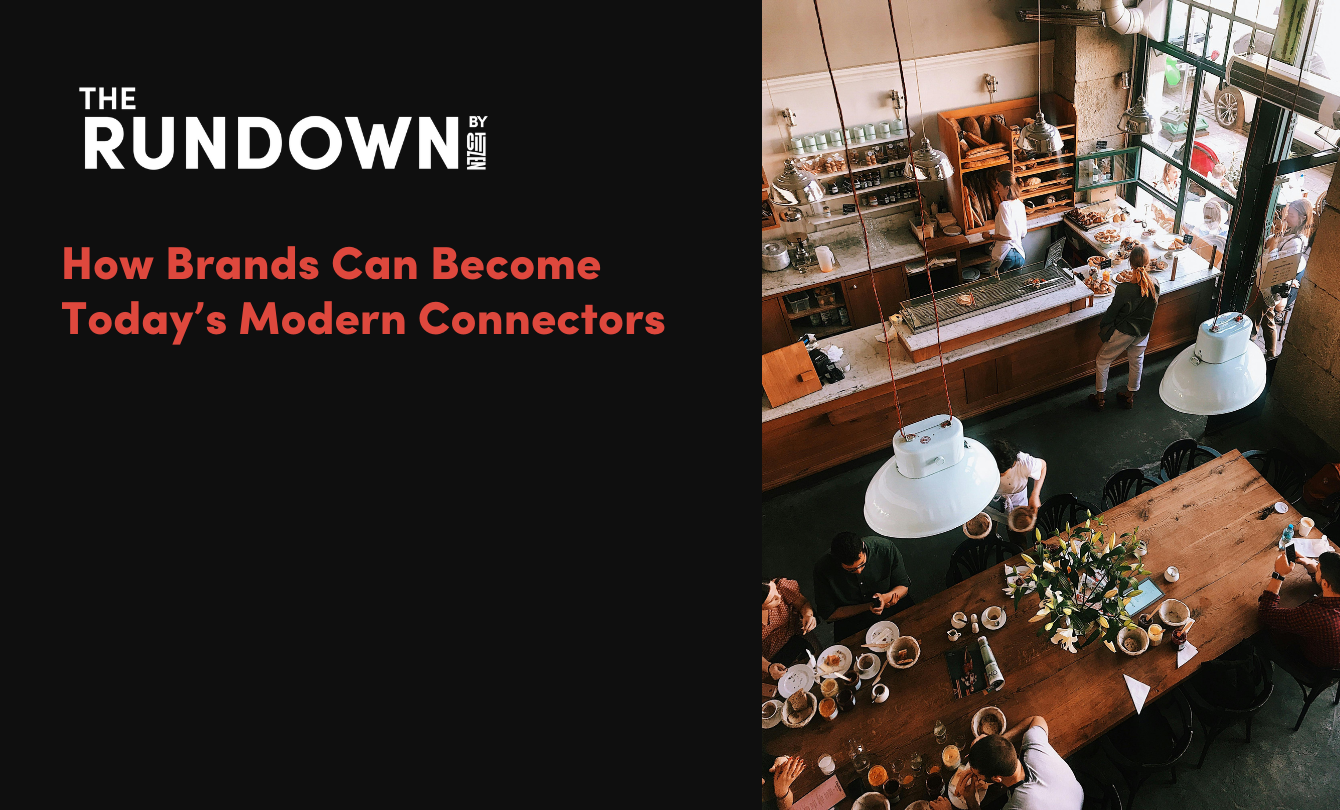

How Brands Can Become Today’s Modern Connectors

In an era of digital isolation, brands have an unprecedented opportunity to become the architects of human connection. Behind screens and algorithms, people are desperately seeking authentic, meaningful interactions. This isn’t just a marketing challenge—it’s a human imperative.

Consumers no longer evaluate brands solely on products, but on their ability to create genuine, transformative experiences. Today’s marketplace demands more than commerce—it craves connection.

The Connection Currency

Younger generations aren’t just buying products; they’re investing in purpose. They want brands that:

  • Understand their deep need for real-world experiences
  • Create spaces for genuine human interaction
  • Demonstrate a commitment to meaningful community building

We’re seeing it all around us. From the boom of padel courts – the fastest growing global sport – or using AI to match with strangers for a friend date, people are constantly seeking new ways to meet new people, setting the stage for brands to step up. 

Third Places aren’t just marketing tactics — they’re a profound way for brands to serve human needs for belonging, connection, and shared experience. And it goes beyond creating an entirely new space. 

Reimagining The “Third Place”

Innovative brands are discovering that connection doesn’t require building something entirely new. It’s about reframing existing spaces and experiences with intentionality, such as: 

  • A publishing company transforming a bookstore into a sanctuary of shared silence
  • An airline designing relaxation lounges that become safe havens for solo travelers
  • A car brand positioning its vehicle as a conversation sanctuary

Multiple brands have already picked up on this and started finding ways to encourage IRL connection. Canadian bubble tea brand, ChaTime, has re-positioned its cafes as the perfect spot for all kinds of “dates” – opening its doors to Gen Z who not only have a preference for non-alcoholic drinks but also tap into the trend of “man-dates” or “friend dates.” American fashion brand, The Row, asked guests to refrain from using their phones to take any photos or videos during Paris Fashion Week as a way to have consumers fully immerse in the experience. 

The Urgent Call to Action

Cultivating connection is a fundamental shift in how brands can serve humanity. The most successful companies will be those who recognize that their greatest product isn’t what they sell—but the connections they enable.

Marketers and agencies have a responsibility to design experiences that don’t just capture attention, but heal our collective loneliness. The future belongs to brands brave enough to prioritize human connection over mere consumption. 

The 2024 Citizen Connections Report shares tangible insights on just how to do that – read it here

Cowling’s Corner: Navigating the AI Revolution in PR – The Surge of Deepfakes

AI is revolutionizing how we create and digest content, but as the saying goes, with great power comes even greater responsibility. I know I’m echoing the sentiments of many in the public relations sector as we enter an era where the boundary between artificial and authentic content is rapidly blurring.

At the heart of the PR discipline lies trust—a relationship between a “public” and those wishing to convey a message. Yet, with the rapid growth of deepfakes and a new breed of AI-generated content, there’s an impending threat to the truth and trust that public relations values above all. The implications for communicators are profound: how does one maintain the sanctity of truth when technology can convincingly distort reality?

The Rise of AI in Public Relations

The integration of AI in PR is accelerating, transforming various activities ranging from data analysis to content creation. However, this rapid adoption comes loaded with ethical and legal considerations, especially regarding AI-generated content, which can mislead audiences with fabricated imagery and messaging.

Deepfakes are not only a litmus test for technological advancement but also for our societal values, and they pose a real and present threat. Legal frameworks and political policy struggle to keep pace with the rapid evolution of AI, leaving gray areas that malicious actors exploit, thus undermining public trust.

As a response, PR professionals must become adept in technologies that both create and detect deepfake content.

  • Understanding AI capabilities and limitations is key in discerning real from fake.
  • Implementing robust verification processes ensures content truth.
  • Investing in AI literacy will empower PR professionals to advocate for ethical AI use.

It might be an ambitious vision for the PR industry’s future with AI, but AI for good must be our industry mandate, with a clear nod towards transparency as “non-negotiable” in the age of AI.  With the rapid growth of disinformation out there, we play an essential role in shaping narratives that respect and drive truth, trust and authenticity. By focusing on education, applying rigorous authentication standards, and advocating for transparent and ethical AI use, we can navigate the choppy waters of the digital age. It may not be enough, but it doesn’t mean we shouldn’t try. After all, balancing innovation with integrity can maintain the trust we work so hard to build—and protect the cornerstone of all our connections.