Citizen Relations Continues Global Ascent, Closing 2025 with Strategic Promotions and Integrated Growth

Citizen Relations is underscoring its commitment to talent investment and strategic growth by announcing a wave of key Citizen Relations promotions in 2H 2025 across its global offices. Building on the momentum from its first-half advancements and a stellar year of growth, the agency is wrapping up 2025 by recognizing Citizens across all specialties. 

Citizen is a global PR agency built to give ambitious brands the curiosity, confidence, and courage to stay ahead of trends and maximize measurable success. A series of global promotions across the second half of 2025 ensure that the talent driving this mission continues to be recognized and empowered:

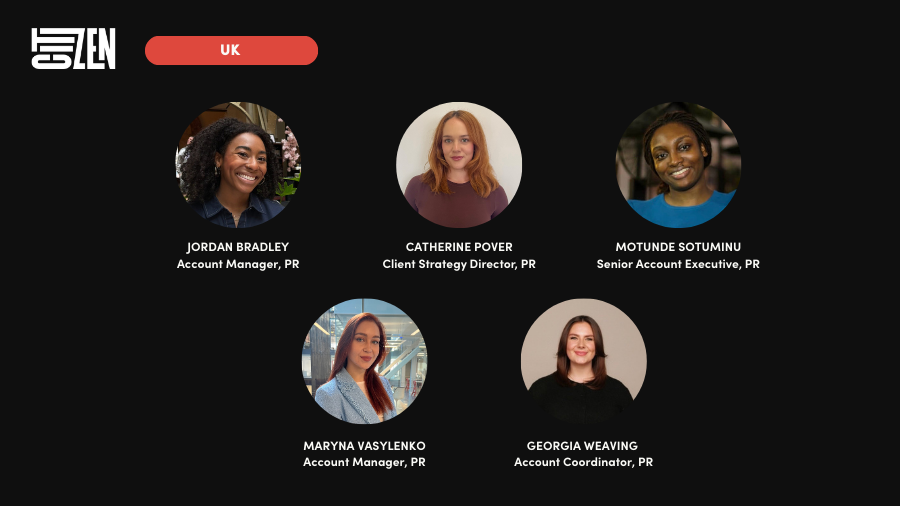
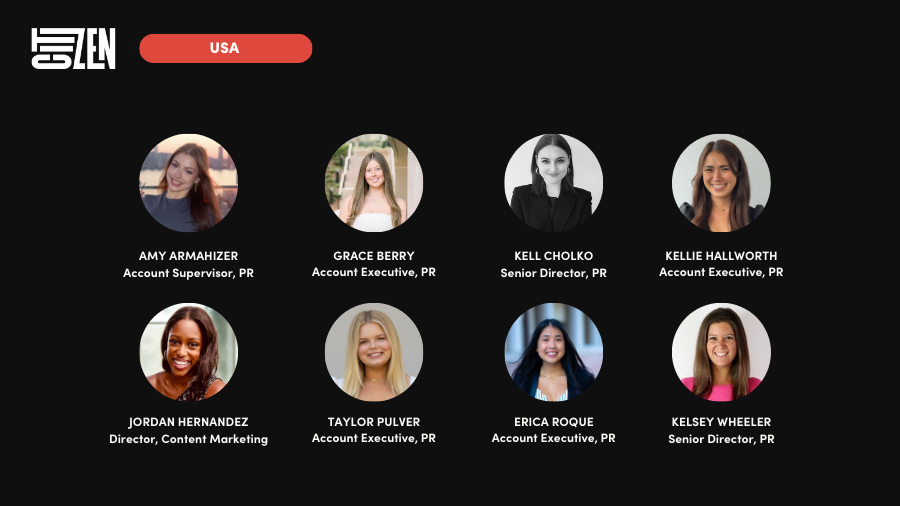
  • Kell Cholko, who leads the P&G Ventures account in the U.S., has been promoted to Senior Director, PR
  • Jordan Hernandez, a U.S. based leader on the global Marketing and Growth team, has been promoted to Director, Content Marketing 
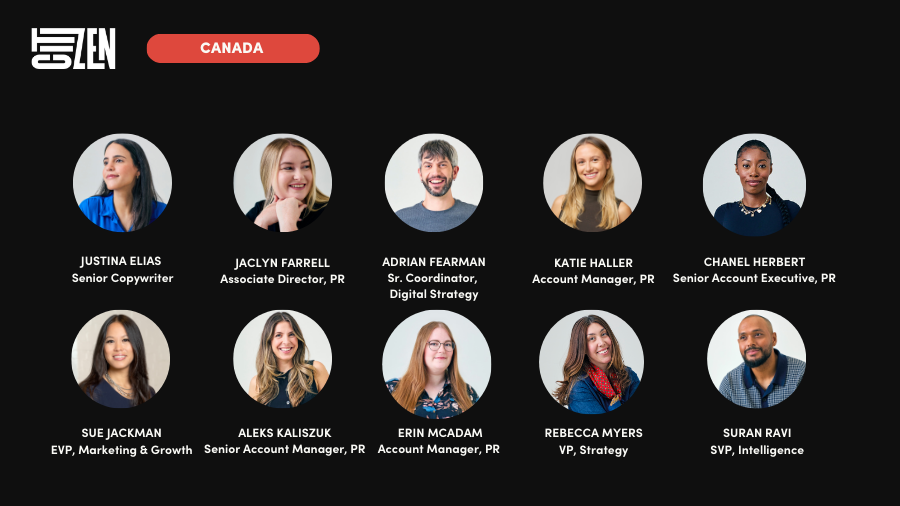
  • Sue Jackman, who led the agency’s global rebrand in 2022, joins the agency’s executive leadership team with her promotion to Executive Vice President, Marketing and Growth
  • Rebecca Myers, who has worked on such award-winning campaigns as Elimin8Hate’s ReclaimYourName.dic and Molson’s Keep It Real Can, has been promoted within the global strategy team to Vice President, Strategy
  • Catherine Pover, who leads strategy for P&G in the UK, has been promoted to Client Strategy Director, PR 
  • Suran Ravi, who leads Citizen’s expanding insights and intelligence group globally, has been promoted to SVP, Intelligence 
  • Jonathan Siemens, who has worked on such award winning campaigns as Chill Train and Fix Tixflation for Molson Coors Beverage Company in Canada, has been promoted to Vice President, PR
  • Kelsey Wheeler, who leads the Spruce, Valvoline Global and Duracell accounts in the U.S., has been promoted to Senior Director, PR

These advancements reflect Citizen’s focus on integrated capabilities and its continued investment – amidst great industry turbulence – in developing internal leadership.

“As we head into 2026 it’s clear that reputation is a brand’s most critical strategic asset,” says Nick Cowling, CEO of Citizen. “These promotions across our offices reflect our commitment to investing in the talent and integrated capabilities to help our clients protect and grow that asset.”

The full list of Citizen Relations promotions includes: 
 

Accelerating Momentum, Accolades, and Actionable Intelligence

Citizen Relations promotions indicate sustained investment in its people and its modern, tomorrow-first approach is generating significant external recognition. The agency has been named to PRNews’ Agency Elite Top 120 list and earned Strategy PR AOY – Bronze, marking its third consecutive year on the podium.

This commitment to growth is driven by the necessity of navigating today’s complex consumer landscape. Citizen’s recently launched Gen Z Collective, using an audience intelligence-led approach to directly address this complexity. The report identifies five distinct Gen Z personas that enable ambitious brands to move beyond guesswork and build a stronger consumer strategy. 

Citizen’s year was also marked with the launch of key new business partnerships across offices, including Jack Link’s and Nature’s Path. By leading with curiosity, Citizen is continually leveraging data-driven insights and technology to uncover hidden opportunities to deliver maximum impact to clients. 
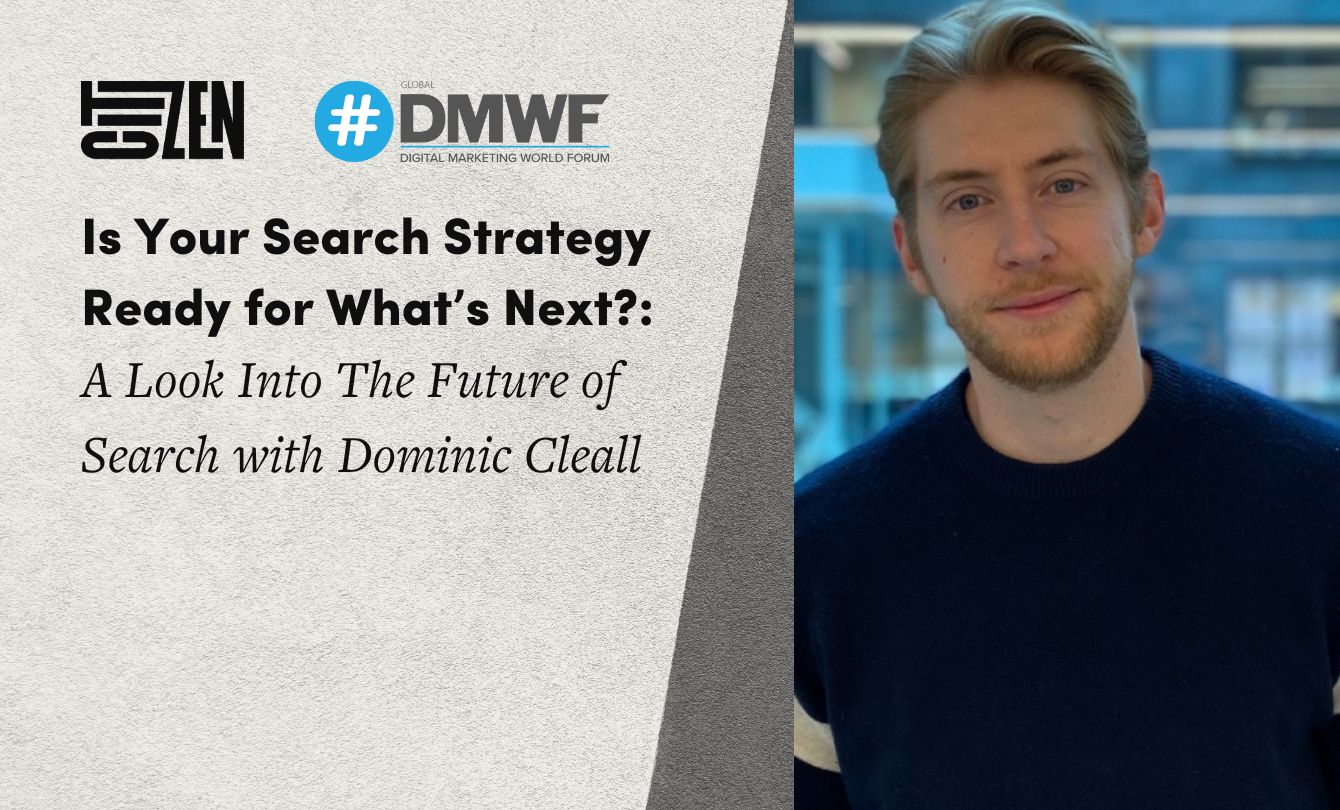
Is Your Search Strategy Ready for What’s Next? A Look Into The Future of Search with Dominic Cleall

Back in October, I had the privilege of traveling from the UK to the US to speak at the Digital Marketing World Forum in New York City, sharing the stage with industry thought leaders to discuss the future of marketing.

At the conference, my talk focused on how brands can ready themselves for what is next in today’s highly fragmented search world.

The discussion that followed my session was one of the highlights of the event for me, underscoring just how important this topic is for marketers today, given the strong interest and thoughtful questions from attendees.

I wanted to recap some of the core themes and insights from my presentation for those who couldn’t join in person.

The Search Crisis: Why Traditional SEO and SEM Are Breaking

Brands today are facing a major challenge as the traditional rules of search are being upended by two powerful forces: evolving consumer search behaviour and the rise of generative AI. Making traditional SEO and SEM more expensive and less effective

The modern consumer doesn’t search – they discover. For years, the path to purchase was a predictable journey: 

  1. A user had a need
  2. Typed a query into Google
  3. Clicked a link
  4. Landed on a website.

That era is definitely over!

We are in a new era of discovery, one fragmented by social media, driven by conversational AI, and defined by a new generation of users (Gen Z). 

The Fractured Landscape: Search is Everywhere

The old destination, the search bar, is now one of many starting points. 

Gen Z has shifted search behaviour, transforming platforms like TikTok, YouTube, and Instagram into visual, socially-validated search engines for everything from “nice restaurants in London” to “skincare for oily skin.”

Zero-click search with Google AI overviews is now becoming an essential part of how we find frictionless answers – making traditional SEO brand visibility and ROI difficult to quantify. 

AI is also becoming a beacon for multi-dimensional search, enabling users to merge text, imagery, and voice into a single search term, driving further personalized recommendations. 

For brands, this means your visibility strategy must extend far beyond Google.

In short: If you’re NOT in the answer, you’re NOT in the funnel.

The Solution: One Integrated ‘Whole Search’ Strategy

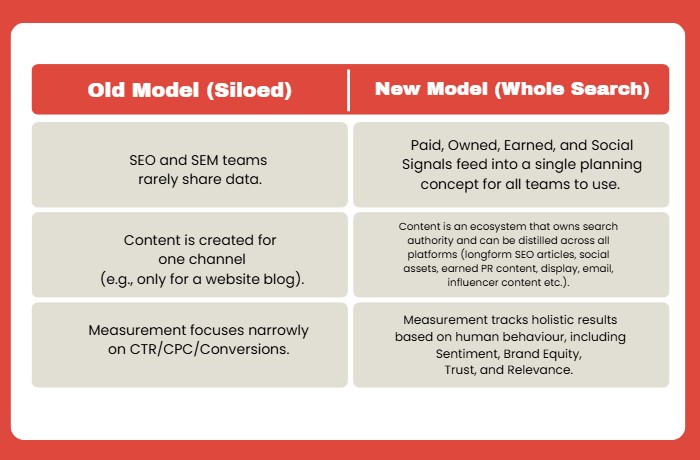
Brands need a unified approach that anchors their content strategy in human intent that can be activated across all channels. We call this Whole Search.

“Chasing algorithms is a losing game. Algorithms are constantly changing, but human behaviour signals are your constant.”

Whole Search is a modern, comprehensive approach designed to address the fractured search landscape and rebalance marketing efforts across Paid, Earned, Owned, and Shared tactics.

Whole Search has three essential principles that brands can adopt, to ensure they are creating the content strategy of the future: 

Principle 1: Lead with User Intent

The core of Whole Search is understanding the ‘why’ behind the search. Stop optimizing solely for keywords; start optimizing for intent. 

Whole Search goes beyond the standard intent categorization (Informational Intent, Transactional Intent, Navigational Intent, etc.). 

We add additional intelligence layers, for example, by classifying audience questions across all platforms, from forums and social media listening to traditional search queries we can uncover high-intent questions and build content that genuinely solves problems across the entire funnel and channel ecosystem. 

Principle 2: Break the Silos

A cohesive search strategy requires operational alignment. 

Teams must Plan, Activate, and Measure together, using one accessible set of holistic insights.

Principle 3: Develop an AI-Ready Content Engine

The future of search is a conversation, not a list of links. 

To succeed, your content needs to be effortlessly digestible by large language models (LLMs).

To become the answer, brands must commit to an always-on content engine (not just a campaign mindset) that is specifically optimized for AI, your content strategy needs to answer these essential questions:

  1. Assess: Can your team move fast enough to respond to trends and news in real-time?
  2. Optimize: Is your language and are your assets conversational and easily understood by AI?
  3. Structure: Is your content formatted with clear signals, like headings, clean lists, and structured data that an AI model can reliably parse, cite, and summarize?

The New Search Mandate

The shift in consumer behaviour is rapid, and the technology is accelerating. 

This is no longer a conversation about SEO best practices; it’s about competitive survival.

By the end of this article, you should have four key takeaways to ensure your content strategy is ready for what’s next:

  1. Search is a Powerful Signal of Consumer Behaviour: Be present where your audience begins their journey
  2. Break the Silos: Plan, activate, and measure as one unified team.
  3. Lead with User Intent: Shift from chasing algorithm updates to understanding human needs.
  4. Become the Answer: Build an authoritative, always-on content strategy for the age of AI.

The brands that will win the next decade will be the ones that stop viewing search as a destination and start embedding themselves into the fabric of the customer’s decision-making behaviour.

Want to know more about how we can help with your specific challenges? Take a 3-minute diagnostic quiz to find out

The Untapped Power of Earned: Why Attention is No Longer for Sale

This fall, the marketing community gathered across Canada for the ICA’s Social East and Social Pacific Summits. From Halifax to Vancouver, these conferences brought together hundreds of marketing professionals to explore the future of brand storytelling, behavioural science, and the evolving media landscape. Among the industry leaders taking the stage were Citizen Relations’ own Lindsay Page and Cher Lee, who delivered a compelling presentation on “The Untapped Power of Earned to Drive Effectiveness in 2025”.

While the conferences covered a breadth of topics—from AI to influencer marketing—Lindsay and Cher centered their discussion on a critical shift in the industry: the resurgence of earned media in an era of distraction.

The Attention Economy: A New Reality

The core of the Citizen Relations point of view is that the battle for consumer attention has fundamentally changed. While time spent on social media has risen to over 2.5 hours daily, actual engagement has plummeted to a mere 47 seconds. Lindsay noted that the “human brain has become adept at ignoring clutter, efficiently discarding what is irrelevant.” Consequently, the traditional “pay-to-play” model is losing its efficacy. As noted in each presentation, “Attention is not for sale.” The brands currently winning are not necessarily those with the deepest pockets, but those telling stories worth listening to.

The Power of Earned

Despite headlines suggesting the decline of traditional media—marked by layoffs and shrinking newsrooms—Lindsay and Cher argue that earned media (PR) holds the greatest potential in modern marketing. Their rationale is grounded in consumer skepticism. Audiences today are savvy regarding paid and sponsored content. This skepticism gives the storytelling-centered discipline of PR a distinct advantage in generating authenticity and relevance. They referenced data (WARC) that supports this pivot: PR was a key metric in 71% of the most-awarded ideas for creativity and effectiveness, compared to being a metric in only 29% of all awarded campaigns. Rather than just viewing Earned Media as an amplification tactic, marketers should consider it a strategic foundation, leveraging its strengths in driving cultural relevance and brand engagement from the start. 

Friction, Feeling, and Truth

To harness this power, Lindsay and Cher outlined a strategic framework designed to break through the apathy of the scrolling consumer:

  • Add Friction and Tension: Contrary to the seamless user experience often preached in tech, they argued that “friction is good.” It represents effort and possibility, forcing the consumer to pause and engage rather than passively scroll.
  • Feeling Over Doing: The focus must shift from the product to the audience. As Lindsay explained, understanding the audience means “getting the mundane right”—understanding the annoying bits of their lives and what riles them up, not just their dreams.
  • Find the Truth: Cher  emphasized that “effective work centers on the consumer’s desires and fears.” Meaningful marketing must bridge the connection between the brand and the audience, rather than simply listing product features.
  • Be Attention-Worthy: In a world where engagement is measured in seconds, brands must earn their place. The goal is to show up in the consumer’s world rather than inviting them into the brand’s world.

The Future of the Industry

Looking toward 2026, both leaders expressed optimism about the industry’s evolution, provided marketers are willing to adapt. For Cher, the future is defined by a reversal of the traditional dynamic.

“For the first time, human behavior is driving marketing, not the other way around,” she noted.

Where advertisers once created needs, they must now root their work in deep human insight. She also highlighted the necessity of adapting to AI, which is reshaping search and discovery, requiring brands to optimize for new algorithms to break through.

Lindsay emphasized resilience and the “creative playground” that small markets can offer when they are properly understood. She championed the idea that “change is good,” advocating for constant reinvention and the resilience required to stand out as a brand.

Ultimately, their message to the attendees at Social East and Social Pacific was clear: In an age of infinite content but finite attention, the future belongs to those who can earn it.

Winning with the 5 Personas: The Intentional Sip – Why Gen Z’s Quest for Control is Redefining Beverages

The term “Sober Curious” has dominated conversations about Gen Z drinking habits, but it’s widely misunderstood. The narrative often centers on abstinence when the reality is far more nuanced. While Gen Z consumes approximately 20% less alcohol than Millennials, Citizen’s latest research in the Gen Z Collective reveals something more sophisticated at play: the 5 personas uncovered aren’t outright rejecting alcohol—they’re rejecting thoughtless consumption. They’re saying no to the “default drink.”

Here’s what makes this shift so compelling: Gen Z’s health consciousness doesn’t translate to universal sobriety. Instead, their desire for control and convenience is driving them toward specific, premium alcoholic options. They’re making choices that allow them to feel intelligent and empowered—fully in command of their bodies and social experiences.

The Data: Rejecting the Ordinary

Gen Z demonstrates a decisive shift away from traditional, high-volume alcohol categories. They’re not just avoiding beer and wine—they’re rejecting the entire culture of generic, mindless consumption. Their preference? Beverages engineered for precision and convenience: Ready-to-Drink (RTD) cocktails and Hard Seltzers.

When we examine their RTD purchase drivers, three criteria dominate:

  • Alcohol content level
  • Uniqueness
  • Calorie count

Every sip is a calculated decision. The RTD category—whether alcoholic options or functional non-alcoholic alternatives—serves as the ultimate moderation tool. It enables defined choices without sacrificing flavour or social connection. Brands win by selling intentionality itself: superior, consistent products that define the experience upfront (ABV, ingredients, precise flavour profile) and give Gen Z consumers complete control over their consumption.

Winning with Gen Z: A Persona-Driven Marketing Strategy

To connect with this highly discerning audience, marketers must shift focus from selling liquid volume to selling the intentional, controlled experience. By leveraging the insights from Citizen’s Gen Z Collective, brands can tailor their messaging to meet the distinct needs of each of the five personas.

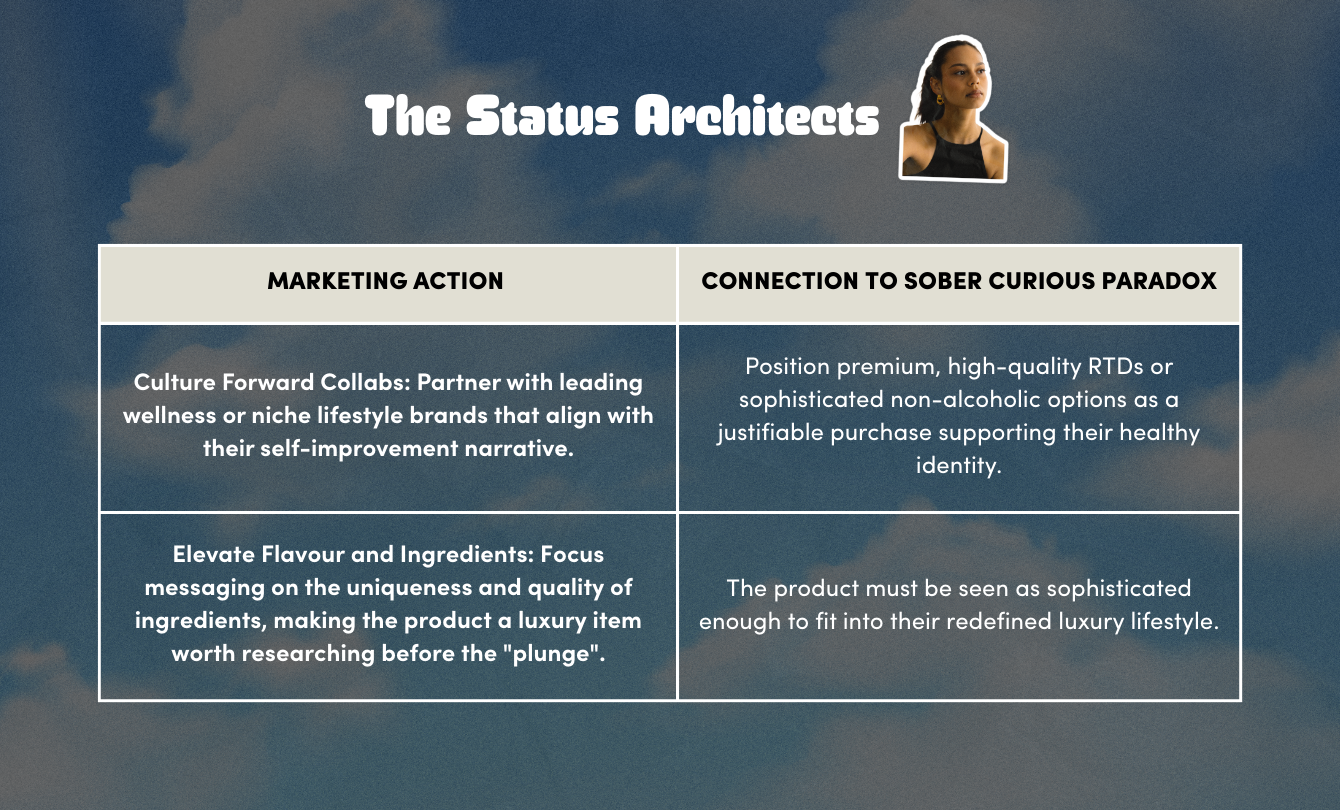
1. The Status Architect: The Wellness Collaborator

Status Architects are ambitious, image-conscious, and prioritize wellness and self-improvement, placing them firmly in their “wellness era”. They redefine “going out” to favour daytime Coffee Parties and wellness clubs. They desire luxury, even redefining their groceries to include high-quality brands like Liquid Death and Olipop.

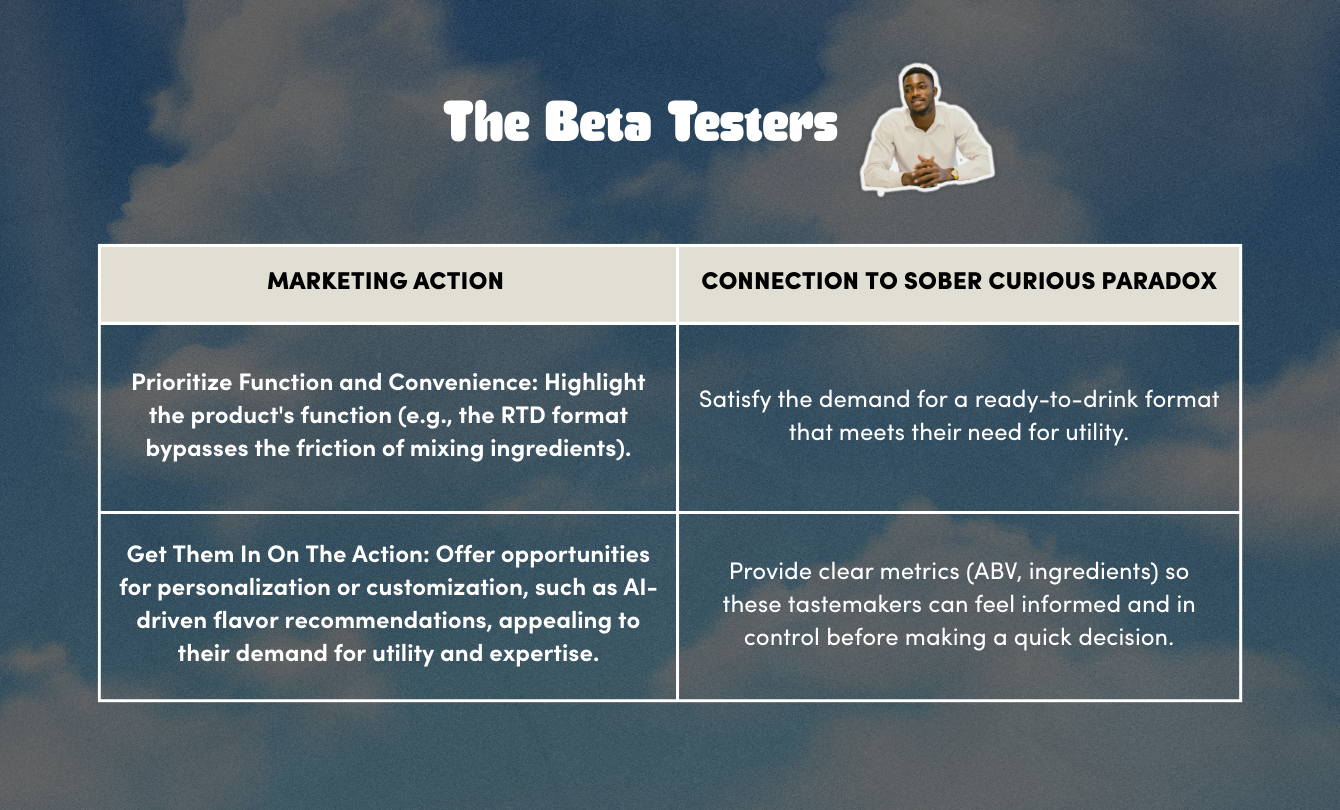
2. The Beta Tester: The Utility Champion

Beta Testers are confident, opinionated leaders who thrive on being the first to adopt new things and demand utility and convenience. They are looking for frictionless, superior experiences.

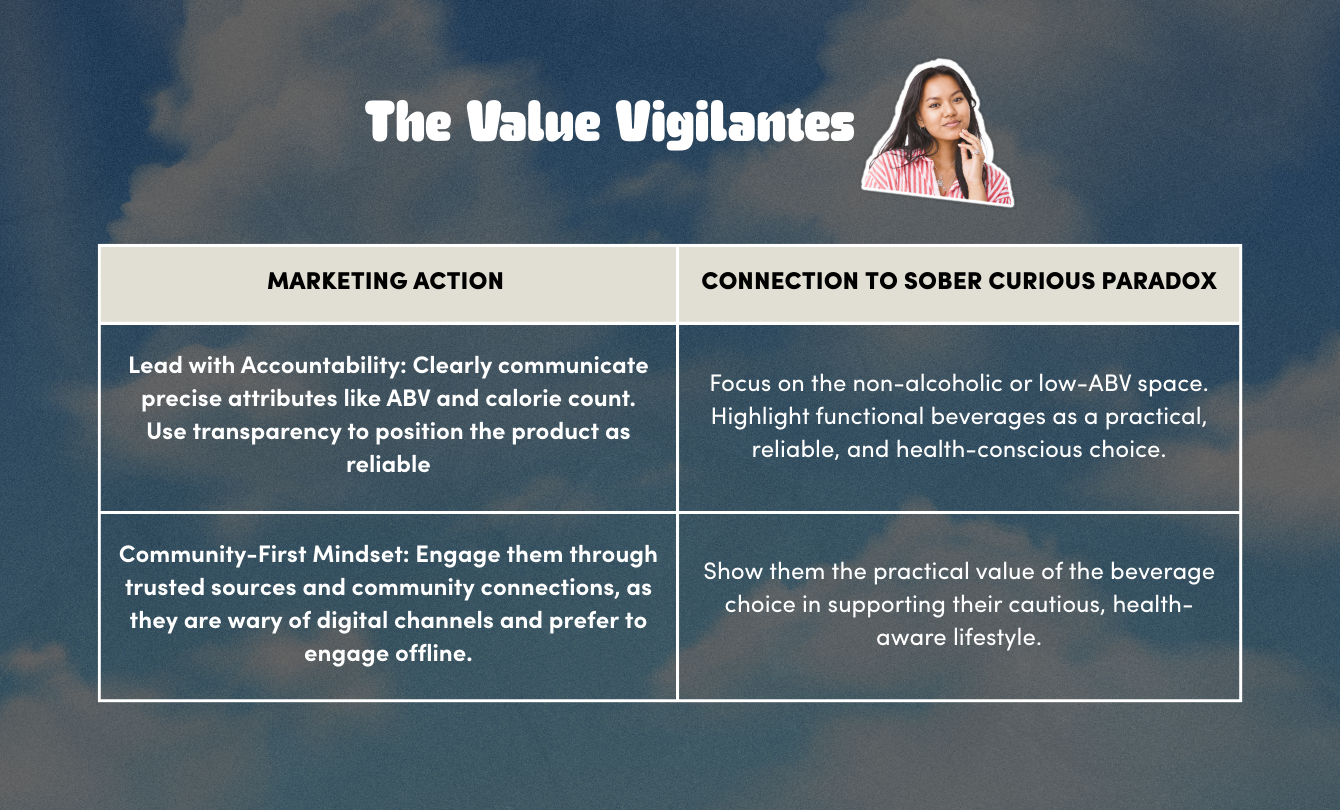
3. The Value Vigilante: The Transparency Seeker

Value Vigilantes are practical, cautious, and hold brands to a high standard, seeking reliable brands and expecting transparency. Sobriety is specifically noted to be on the rise within this group, demonstrated by the popularity of drinks like Poppi and Olipop.

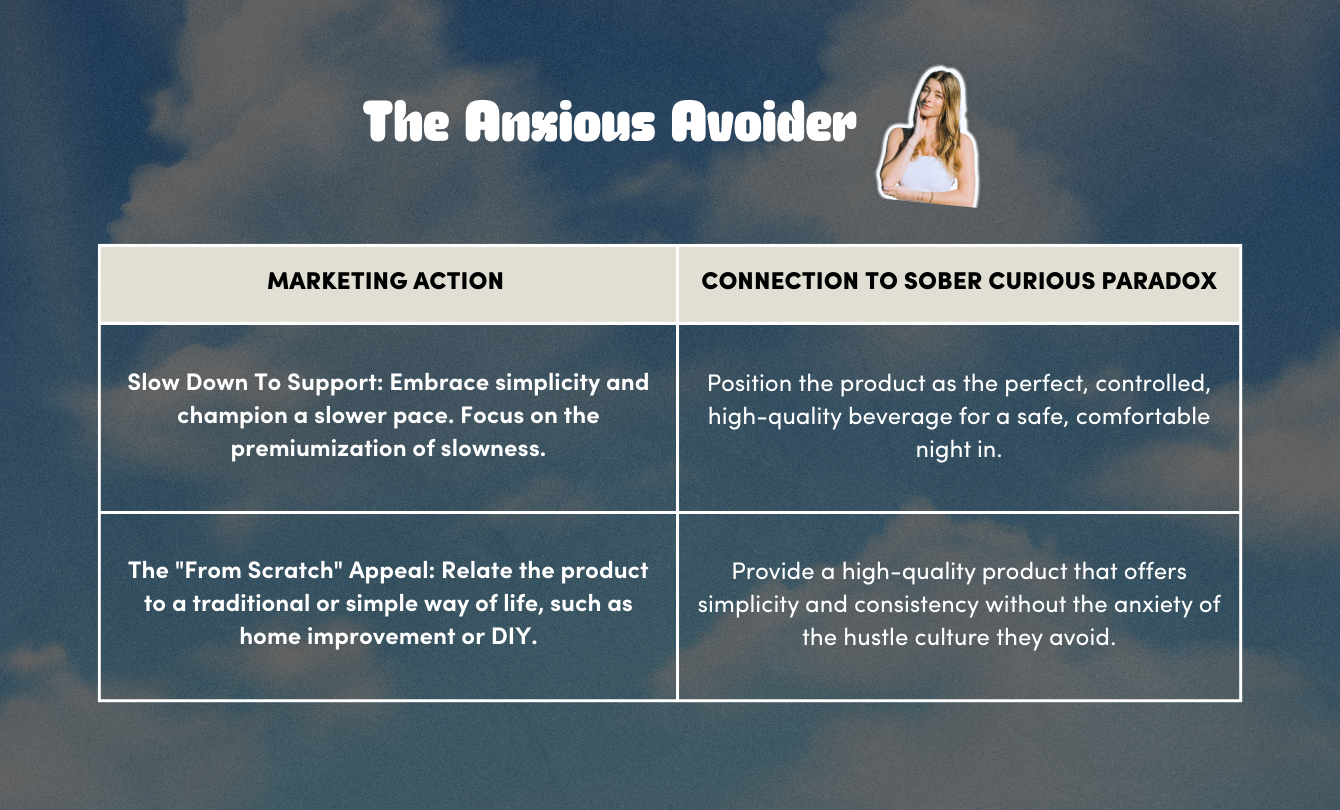
4. The Anxious Avoider: The Comfort Creator

Anxious Avoiders crave comfort, familiarity, and a slower, simpler pace. They are the “Homebody Generation” and seek acceptance and community where they feel safe (at home).

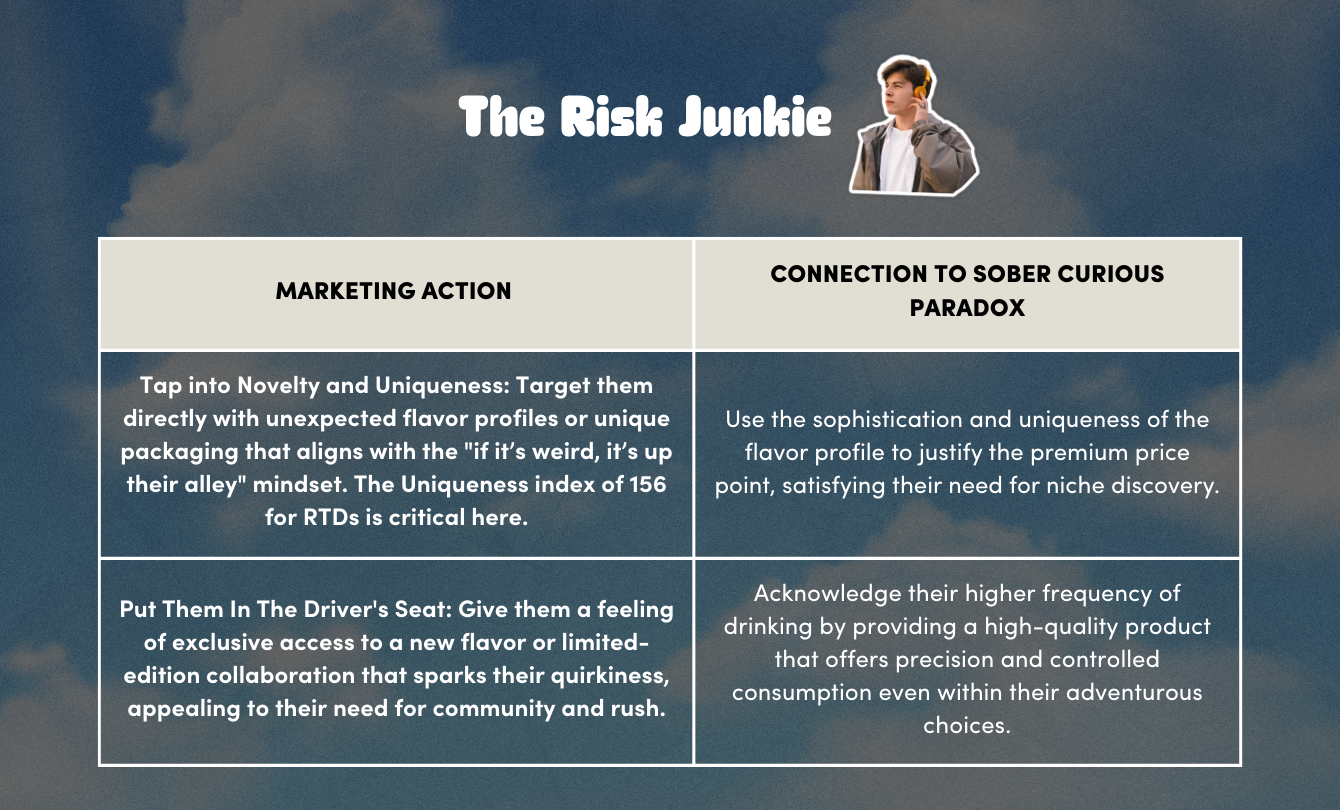
5. The Risk Junkie: The Niche Enthusiast

Risk Junkies are adventurous and embrace the niche, the novelty, and the weird. They value strong communities and are the most likely cohort to drink more than once a month (43%).

The CEO Takeaway: The Experience is the Product

The future of the beverage category hinges on the intentional experience, not liquid volume. Brands that position themselves as “unintentional consumption” will lose Gen Z entirely.

To win, brands must:

  • Prioritize Precision – Clearly communicate attributes like ABV, calorie count, and ingredients
  • Elevate Flavour – Justify quality through unique, sophisticated taste profiles
  • Validate the Choice – Position your product as the intelligent decision that supports a balanced, wellness-focused lifestyle

Gen Z isn’t drinking less—they’re drinking smarter. The brands that understand this distinction will define the next era of beverage innovation.

For a custom look at how your brand can win with each persona, download the report and connect with us

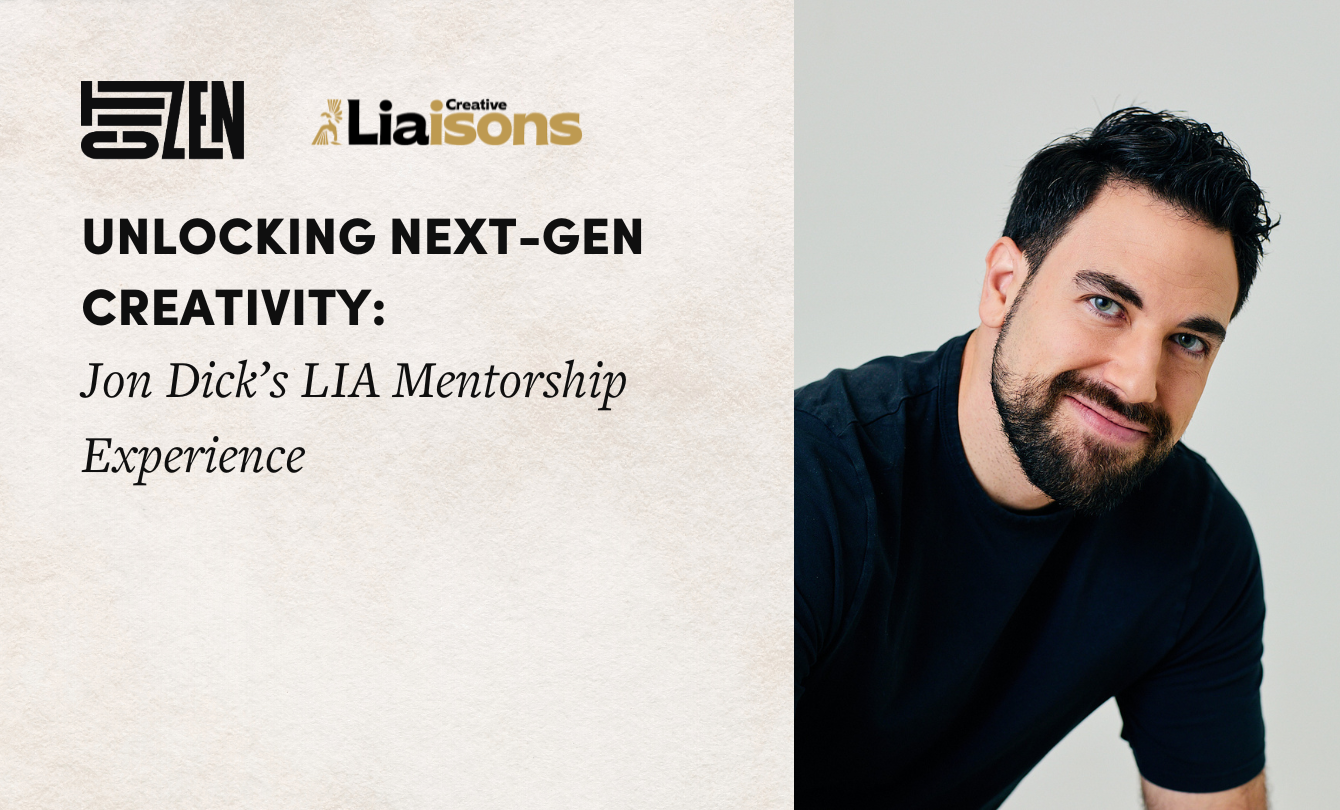
Unlocking Next-Gen Creativity: Jon Dick’s LIA Mentorship Experience

Citizen Relations believes in the power of curiosity and mentorship as a critical form of connection in the creative space. Their commitment to empowering curiosity and nurturing the next generation of leaders is exemplified by the journey of Jon Dick, Senior Copywriter based in Toronto. Jon is in progress at the highly selective London International Awards (LIA) Mentorship Program. This intensive, global initiative connects Jon with a curated panel of industry leaders, offering a unique, executive-level perspective that is now being infused directly into his agency work.

For Jon, the LIA Mentorship program ensured he was prepped with the ability to secure a path forward in a rapidly evolving industry. Jon sought guidance from a diverse group of creative leaders working across different sectors and regions. This intentional breadth confirmed a vital truth: success is achieved by forging your own unique path, one that often “meanders” through different experiences.

A major topic of conversation with global leaders was the looming question of Artificial Intelligence. While uncertainty abounds, the consensus from Jon’s mentors was overwhelmingly optimistic: AI will function as an increasingly embedded tool in the creative process, but it won’t replace the core human element.

“In a world dominated by AI, the differentiating factor will be ‘taste,'” Jon notes. “This requires the uniquely human ability to judge the quality of work, to believe in humanity, and to possess that individual belief in what is truly good.”

The most significant lesson Jon is bringing back to his day-to-day work at Citizen is a refined clarity: success is about creating work that makes a measurable impact now, not just chasing titles or flashy campaigns. This shift in mentality emphasizes driving the most significant value for clients and consumers, aligning perfectly with Citizen’s commitment to setting the industry standard and unleashing potential for its clients.

The key takeaway that aligns closest with the agency’s values is the mandate to be “insatiably curious.” Jon stresses that curiosity is the essential fuel for all creative professionals, leading them to find new insights and avenues for breakthrough work. Much like Citizen’s CCO Josh Budd advocates for, Jon is prepped to expand his Creative Range of Motion (CROM) and stretch his creative muscles. 

Jon’s mentorship experience required him to chase down meanings to feed his curiosity, which reinforced that great opportunities are only “half the battle.” The journey to success never ends, and sustained effort, driven by relentless curiosity, is the key to unlocking true potential.

Tomorrow First: Senior Leaders Chart the Course for 2026

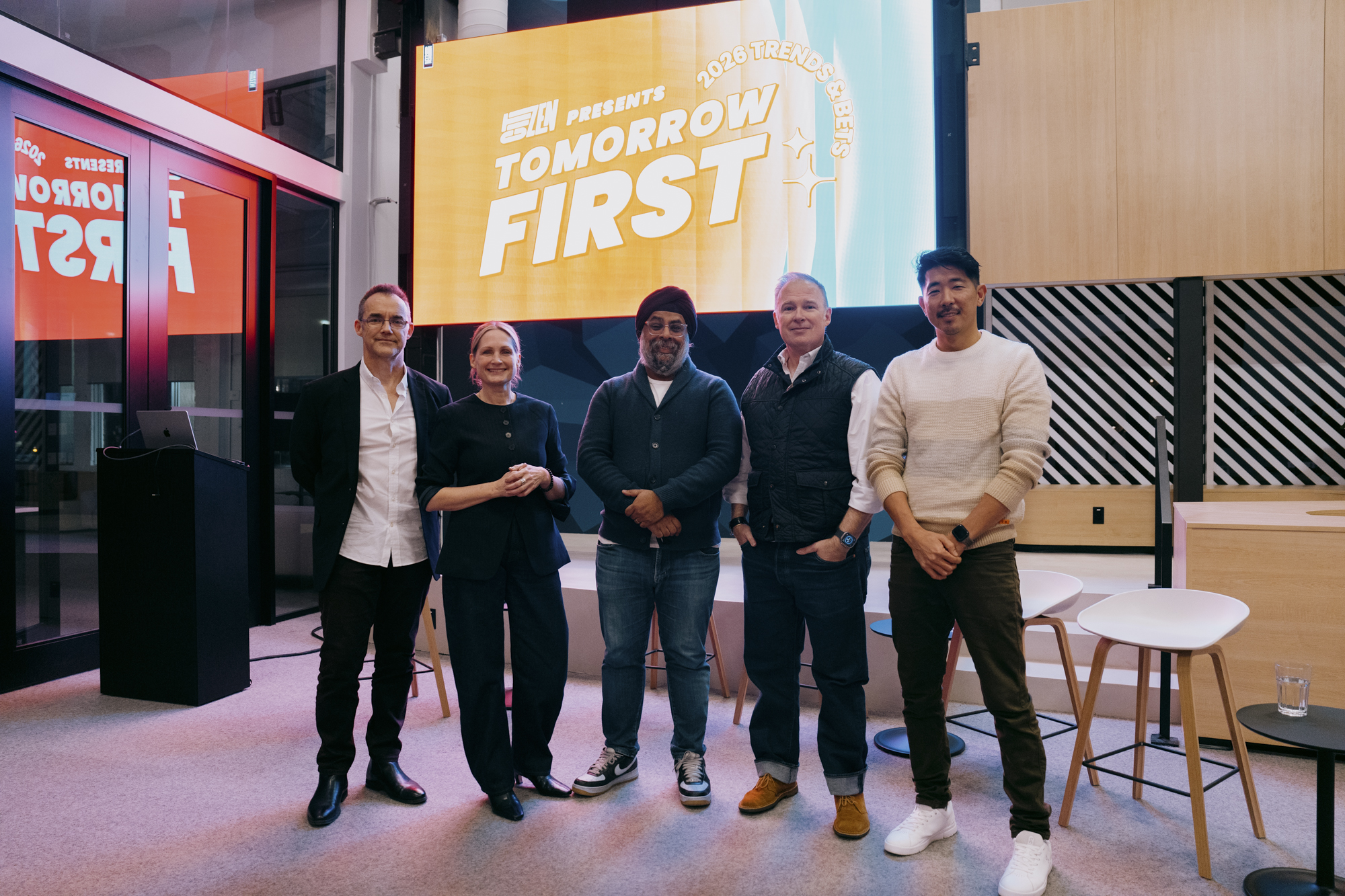
Citizen Relations recently hosted “Tomorrow First: 2026 Trends & Bets,” a panel discussion in their Toronto office exploring how brands can successfully build reputation, trust, and discoverability in the face of AI and evolving consumer behaviour. Citizen is fresh off a 3-year run on Strategy’s AOY podium and ready to go full force into the new year. The event – moderated by CEO Nick Cowling and framed by EVP, Marketing & Growth Sue Jackman – emphasized Citizen’s “Tomorrow First” approach to keeping clients ahead of culture.

The Panelists:

The discussion featured four distinguished industry leaders navigating transformation in their respective fields:

  • Tanbir Grover (Chief Marketing & Digital Manager, Pet Valu): Focused on data-driven growth, analytics, and customer experience.
  • Dave Kim (Head of Industry, TikTok): Offered perspective on the creator economy and social discovery.
  • Jon Macca (Chief Marketing Officer, RBCx): Shared insights on tech, retail marketing, and adapting established brands.
  • Kate Torrance (VP, Head of Brand, Content & Comms, SickKids Foundation): Provided a mission-driven perspective on building trust and brand.

Four Forces Reshaping Marketing

Brand Building Makes Its Comeback

The pendulum is swinging back from pure performance marketing. Data now proves the tangible dollar value of investing in brand reputation and trust. As Kate explained for SickKids Foundation, “Brand work brings in the love, while performance work provides the tactics that close the donation gift.” Jon emphasized the need to rebuild: “We must extend our brand story and invest in the long-term equity that drives organic discovery and recommendation.”

The Baseline? Being Real 

The panel’s advice on what brands must stop doing was refreshingly direct:

  • Stop taking yourselves so seriously. Magic happens when brands loosen up and show personality on social platforms.
  • Stop selling in every piece of content. Focus on being genuinely useful rather than creating thinly veiled sales pitches.
  • Stop creating overly staged content. Amplify real, human moments from your community instead.
  • Stop being performative. As Kate warned, people will quickly notice and call it out.

When we take on a creator approach with this lens, the credibility lies in the genuine connection between the brand, the creator, and the community. When that partnership is truly authentic relationships are built among creator ambassadors and the audience. 

Navigating AI-Transformed Discovery

The classic SEO funnel is fracturing. Dave described the new three-stage discovery journey: using AI chat for planning and structure, TikTok for social proof and lived experience, then traditional search for transactions. In short: AI gives us information, but social is a critical compliment in giving that information texture and human context that we crave. Jon sees AI’s biggest promise in analytics—pulling together disparate datasets for real-time impact and better attribution. Meanwhile, Pet Valu is exploring AI-powered personalization at scale.

Irreplaceable Human Skills

As AI advances, the most valuable leadership capabilities are becoming more human: discernment and bravery to know when to trust data versus instinct, compassion that AI cannot replicate, and cultural awareness to protect brand reputation as things move fast.

Citizen’s Strategic Response

Nick outlined how Citizen is addressing two fundamental industry crises:

Whole Search audits how content performs across social platforms, AI answer engines, and traditional search—ensuring clients show up as the answer everywhere people look.

Experience Renaissance recognizes people’s craving for tangible, real-world interactions that build trust in ways digital alone cannot. The future blends Whole Search discoverability with experiential storytelling.

The Path Forward

The brands that will thrive won’t be those with the biggest budgets or most sophisticated AI. They’ll be the ones brave enough to show up authentically, strategic enough to meet audiences across fragmented discovery journeys, and human enough to build connections that matter.

In a world changing faster than ever, the only sustainable strategy is to stay tomorrow first. If you are ready to future proof your strategy, reach out for a quick chat. 

AI, Agility, and the Blurred Lines: A Look to the Future and Our Time at the 2025 PRovoke Global Summit

The PRovoke Global Summit has always been where senior communications leaders gather to confront the profession’s most pressing challenges. This year’s Chicago event—centered on “Why Relationships Matter More Than Ever”—revealed an industry in the midst of fundamental transformation.

Citizen Relations took to the Windy City to experience the conference first hand, even walking away with a Global Sabre for a top campaign of the year recognition for its Undone campaign. Beyond the accolades, the Summit’s conversations exposed three critical shifts reshaping how PR operates in 2025 and beyond. Here’s what our Citizens learned:

1. AI Has Redefined What “Agility” Actually Means

AI dominated every conversation. Mary Kate McCarthy, Associate Director, PR, observed this year’s event was “much more AI & crisis management heavy” than previous gatherings, with Josh Budd, Chief Creative Officer, noting “every third conversation touched on AI in some capacity.”

The reason? PR owns a brand’s reputation, risk, and credibility, making our discipline central to how brands navigate this era of experimentation.

The impact on speed has been seismic. AI tools now outpace traditional cultural and social listening platforms “within months,” delivering faster insights for clients. But speed without strategy is dangerous.

The non-negotiables:
  • Human oversight remains critical. Firms must maintain a “human in the loop” approach, ensuring experienced professionals can still execute without AI when systems fail.
  • Balance your talent. Teams need AI-native skills and seasoned judgment to quality-check outputs.
  • Define your goal first. As McCarthy warned: “You don’t want to be caught just doing something to do it.”

2. The Line Between “Promote” and “Protect” Has Disappeared

The most striking shift? The collapse of traditional PR boundaries. The clear separation between proactive promotion and reactive crisis response is gone.

McCarthy captured it perfectly: 2025 is the year where “two things can be true” in strategy. The political landscape and post-COVID blurring of work and life have made the old “promote and protect” binary obsolete. Crisis management now “feels like a branch of overall PR strategy as opposed to a separate approach, agency, or team.”

What this means: Every campaign requires risk assessment. Every crisis response needs brand positioning. Agencies must build predictive work into everything.

For creatives, this ambiguity is opportunity. Budd declared “PR’s definition is officially undefined. And that’s a great thing for creativity in the discipline”—a philosophy Katie Skinner, Vice President, PR, echoed when discussing the award-winning TurboTax work: “There’s creativity anywhere—even in the most corporate work, creativity can live in the most unexpected places.”

3. EDI and Purpose Aren’t Optional—They’re Innovation Engines

McCarthy delivered one of the Summit’s most powerful takeaways: “There is no innovation without EDI.” The logic is simple: groupthink kills creativity. EDI isn’t just about culture—it’s a competitive advantage.

Skinner reinforced this thinking with her own perspective on creative problem-solving: “Look beyond your borders. Someone in a different market with different experiences can still spark your imagination.” This global, inclusive approach to ideation isn’t just good ethics—it’s smart business.

On corporate purpose, the message was clear: it still matters. While some have tried to course-correct from perceived over-emphasis, Budd noted that in spaces like the SABREs, “purpose still wins a jury room over.”

Younger generations continue driving accountability, with millennial and Gen Z cohorts praised for pushing corporations to align actions with stated objectives.

The Takeaway: The Future Belongs to the Adaptive

The 2025 PRovoke Global Summit painted a picture of an industry that’s simultaneously more complex and more exciting than ever. The practitioners who will thrive are those who can:

  • Harness AI without losing the human judgment that makes great communications possible
  • Navigate blurred lines between promotion and protection with strategic foresight
  • Embed EDI and purpose into innovation processes, not just mission statements
  • Find creativity in unexpected places and look beyond traditional borders for inspiration

As relationships become more critical and the landscape grows more volatile, one thing is certain: the old playbook won’t work anymore. The question isn’t whether to evolve—it’s how fast you can do it.

Citizen Relations is demonstrably operating as a tomorrow-first agency, not just observing these shifts, but actively implementing modern practices that align with the future of communications highlighted at the 2025 PRovoke Global Summit. The agency’s strategic philosophies and recent successes illustrate how they are embracing agility, integrating promotion and protection, and using diversity as an engine for innovation.

Citizen Relations Triumphs Across Disciplines at ADCC and CMA Awards

What happens when you combine tomorrow-thinking strategy with an integrated team determined to unleash potential? Impactful and award winning work.

The agency was honoured at back-to-back award shows last week, receiving wins at The ADCC Awards and The CMA Awards: two of the industry’s most prestigious events. The ADCC Awards (Advertising & Design Club of Canada) celebrates the highest standard of creative excellence in Canadian advertising and design. The CMA Awards (Canadian Marketing Association), recognizes the best in data-driven strategy and marketing success. 

Citizen’s impressive success across multiple shows and varied disciplines is a powerful confirmation of its integrated approach, solidifying its position at the intersection of strategic effectiveness and creative innovation. This achievement demonstrates that true integration is essential for modern marketing success and that unlocking client potential requires a fluid, forward-thinking communication strategy.

Canadian Marketing Awards 2025: 
  • SickKids Foundation: Balloonspotting – GOLD for Social Causes: Customer Experience
ADCC Awards 2025: 

These wins follow a year of success for Citizen, who was just named a PR Agency of the Year winner for the third year in a row and recognized in PRNews’ 2026 Agency Elite Top 120 list earlier this fall. Additionally, ‘Gallery of Memories; was seen earlier this year landing wins at the North American SABRE Awards and the SABRE Innovation Awards, while Fix Tixflation took home Bronze at CLIOs. Citizen attributes this success to its integrated teams, whose collaborative expertise allows the firm to fluidly move between different platforms and objectives, delivering groundbreaking work for its clients.

7 Reasons Tech Firms Hire PR Agencies in 2026

Gaining an edge on the competition remains a challenge for tech firms of any size.

Launching a new product requires planning with so many teams over such a long period of time that marketing and PR can get left by the wayside. However, without a strong tech-focused PR firm, your work could result in a lower return than you’d expected.

Here are seven concepts to guide your PR agency selection.

1.  Find Your Brand Positioning

No matter how specific your lane is as a tech firm, your space is likely already crowded. Any idea that seems remotely lucrative might already have venture capital teams lined up around the block.

Anyone in marketing or sales knows that it’s rarely the product that gets people excited.

It’s the branding, the positioning, the way that consumers identify with the brand.

There were plenty of browsers before Google, but they managed to set themselves apart. There are plenty of CRMs like Salesforce, but they’re the only one that has an annual conference that sales professionals dream of speaking at.

Public relations for technology companies ensures your core message resonates in a unique way, to make you stand out from the crowd.

2. Develop Thought Leadership

No great idea works in a vacuum. It’s in how those ideas are applied in the real world, how they connect to the work and lives of others, that really makes a difference.

Thought leadership content is vital to sharing your brand story and connecting with your audience. Whether you’re posting to social media or sitting down with a nationally televised morning show, PR agencies help keep your messaging clear and succinct.

One of the major problems with any company is that we end up talking in a bubble–using insider language, acronyms no one else understands, and terms that might not connect.

A PR agency helps you avoid that by creating a communications strategy relevant to your base.

3. Get Industry Expertise

Consider a company building an interface or technology for medical sales.

That requires an understanding of tech, medicine, and sales.

Thankfully, when you work with a global PR agency with a broad spectrum of clients, you’ll be able to draw on expertise communicating in all of those fields.

You won’t have to onboard teams to help you to communicate across industries and across channels. Your PR partnership brings that to the table.

4. They Have relationships

Whether digital pr outlets, traditional media, or influencer marketing, you’ll need to build relationships to get the word out about your tech firm.

If you’re seeking out new talent, you need advocacy. If you’re in a competitive marketplace, you need an endorsement. If you’re a startup looking for your next series of funding, you need to build excitement in the press.

The relationships that PR firms build day-in and day-out are the avenue to pursue.

5. Develop Integrated Marketing Strategies

While your team might have some great ideas for marketing content, delivering and deploying that content isn’t likely in your wheelhouse.

A PR firm ensures that your message hits your target audience with products or services that matter.

The best PR firms are no longer detailing in only press releases and communications. They have experiential marketing programs, digital marketing expertise, and the tools to have you ranking on everything from social media to LLMs and search engines.

6. Navigate Brand Reputation Management

Corporate reputation risks are costly if mismanaged. Ask any company that’s had scandals with their board members, supply chain issues, or communications problems.

Anything from procurement to unknown relationships your funders have outside your industry can become grist for the rumor mill. Tech crisis communications requires a specific knowledge base, so ask plenty of questions to ensure the corporate reputation strategy you get includes specifics.

PR firms build your reputation across owned and earned channels 24/7 to ensure that any reputation challenges are seen and extinguished as soon as possible. The work that PR agencies do to build your positive reputation also act as a buttress against any challenges.

They monitor sentiment analysis in real time to ensure our online presence is in line with your crisis management plan. They also watch media coverage, brand mentions, and online reviews to see issues before they arise.

Build trust via a strong reputation and customer experience that comes with working with an award-winning PR company.

7.  Expand Your Sphere of Influence

Instead of wasting time brainstorming new avenues your tech firm can pursue, why not ask your PR agency?

One of the great advantages of working with a PR agency is that they work with such a broad scope of brands and businesses that they’re always thinking of ways to grow.

From serendipitous brand partnerships to spokespeople and sponsors, they’re trained to think outside the box and to come up with creative solutions.

If you want to expand your sphere of influence beyond your industry alone, reach out today.

How to Choose a PR Agency for Consumer Brands in 2026

PR firm selection is a challenging process. It’s more than finding the right people to write a press release and “spread the word” about your brand or business.

The tumult of the 24-hour news cycle shows the value of maintaining your #1 strategic asset – your reputation – against real-time challenges. An ironclad reputation and proactive response to challenges ensures that a news story or fleeting comment doesn’t immediately impact your perception in the minds of your consumers or disrupt your ability to drive revenue.

Here are a few tips on what to look for when seeking out a an agency for consumer brand PR.

Consumer Brands Need an Integrated PR Agency

Strong media relations has long been the backbone of a good public relations agency for consumer brands. Knowing which media outlets to work with, strong thought leadership, and long-term relationships have always been regarded as the key ingredients to drive earned media.

The media landscape has dramatically changed, consumers’ expectations have also changed and a fully integrated PR agency with in-house specialty services will be the most valuable to a consumer brand.  One with real creative and strategy leadership and specialists across digital strategy, applied intelligence, corporate communications, experiential marketing and deep industry-specific knowledge.

While it’s widely understood that integrated marketing communication campaigns helps brands and businesses authentically earn attention with clear messaging across media channels – the story you want to share requires more than great relationships and a well-crafted press release and as the client, your brand or business should expect more than impressions.

Beyond Influencers and Digital Integration

While relationships with journalists will always matter, the channels for consumer brands have changed. We saw a major shift from celebrity endorsements to influencer marketing in the last decade.

Today, the tide is shifting again, with the ‘de-influencing’ of marketing to gen Z and young audiences who are not only scrolling past overly polished messaging but ‘digital detoxing’, seeking meaningful and authentic connection in new ways from new voices.

You need a PR agency who understands how to keep your brand culturally relevant and consistently in front of the audience you care about most. Niche creators that don’t necessarily have a large following but can get their message across and audience to act is what’s needed. An agency that has the skills and tools to find the right conversations to start and can identify the right creators to start them to provide real ROI is crucial.

Mastering influencer campaigns and digital integration means you can adapt to changes in consumer sentiment in real time. And that you can not only respond appropriately to shifts in customer behavior and new communication channels, but be ahead of the tide of change with a partner that has the right tools, technology and talent.

Expect a robust roster of voices to introduce your brand to a new audience. Expect the ability to deploy unified brand communications across channels.

Experiential Marketing is a Major Asset

As younger generations embrace offline IRL experience and connection, experiential marketing has become more important than ever. This is especially helpful with product launch PR campaigns.

Experiential marketing offers your audience branded experiences in new contexts. Integrated PR agencies with experiential expertise are the ones that bring your consumer brand to the biggest festivals and arenas or the most unexpected, head-turning venues.

From market research to execution, experience marketing creates memorable connections with your audience, building awareness and most importantly, trust. It will allow consumers to have a first-hand interaction with your brand to further build those connections. Immersing a consumer in the world of your brand or business creates viral moments to increase brand awareness.

Look for a PR agency with a robust portfolio of experiential marketing experiences and the in-house specialists to make it happen. To bring fully integrated campaigns to life with meaningful impact, understand that experiential is not something PR practitioners can do on the sides of their desk or freelance / outsource to external partners.

Data-Driven Intelligence

We live in a world filled with data – procuring and accessing data is not the challenge. Finding meaningful and relevant insight – and understanding what to do with this insight once you get it – is the real challenge not every brand is meeting.

Find a PR agency with a team of applied strategists and intelligence who, bolstered with industry-leading curiosity and modern tools and technology, can craft unexpected questions to find surprising and meaningful answers. Partnered with a talented PR team, these answers can be expertly packaged up as culturally relevant ideas for your brand or business to drive meaningful growth and impact.

Seek Out Crisis Communications Experts

In a world where misinformation spreads fast, you need a PR agency ready to respond quickly to questions about your products or services.

Seek an agency who also spends their time outside of a crisis building your brand reputation. If you’re only reacting to crises and not working with a team that actively monitors signals, you’re already behind. A good PR team will have social monitoring and intelligence signals set up, but will also have the human expertise to get in front of and handle any situation via any channel. Positive customer sentiment across channels acts as a buttress against any challenge to your brand and even drive sales.

A PR agency with crisis skills will have a reactive plan and a proactive approach to your brand’s reputation but also have the agility to make game time decisions. A resilient team is needed to deploy pre-approved plans when called for but also has the internal “safety” to pivot for the betterment of the brand’s reputation.

Making the Most of Your PR Agency Partnership

Think of your PR partners as your indispensable reputation partner. To identify and select the best PR agency, ask as many questions as possible.

Building authentic relationships with customers is the foundation for any long-lasting consumer brand. Being able to speak clearly about your brand’s needs and goals with your PR agency builds strong relationships. These relationships build trust for a lifetime with potential customers.

If you’re seeking a dedicated communications partner with award-winning integrated marketing experience, reach out today.